Tell us about the job
Takes about a minute. No obligation.
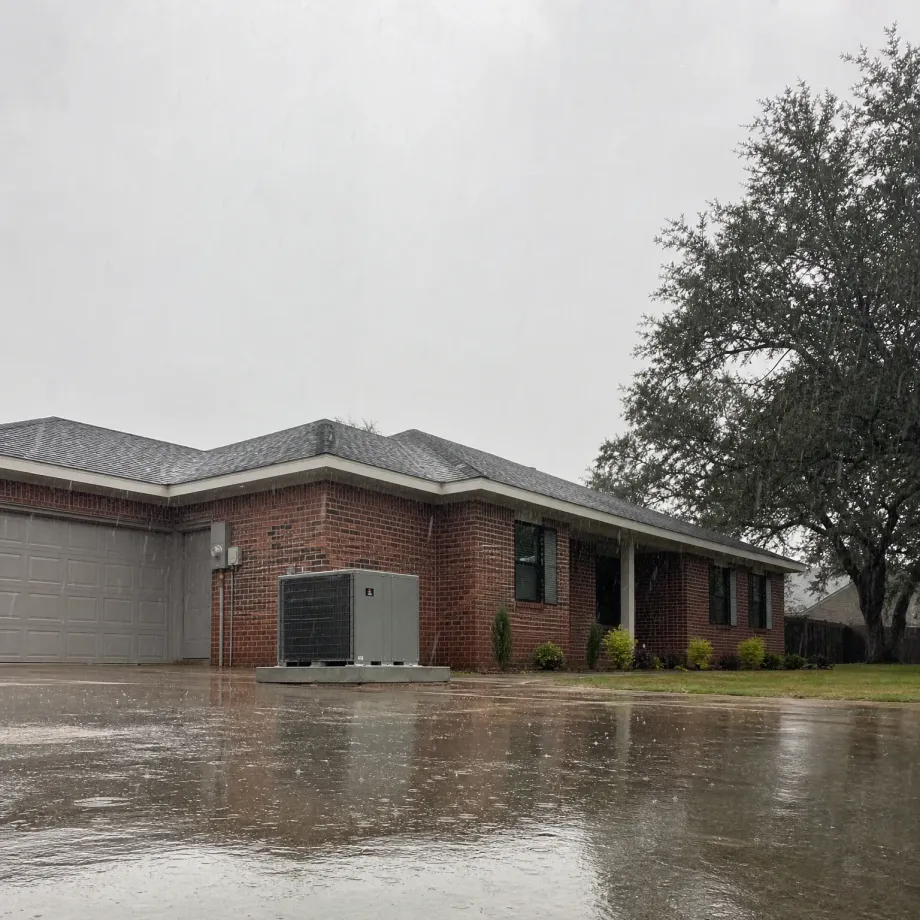
A contractor quoting furnace repair in Liberty County has to decide early what actually failed and why. 128 severe weather events were recorded in Liberty County, Georgia between 2015 and 2024. At that rate, severe weather is a real but occasional factor in equipment wear, and a furnace that shuts down mid-winter is more often carrying years of deferred maintenance or original parts past their service life than it is showing damage from outside conditions. That means the contractor checks the heat exchanger, the inducer, and the ignition system for the usual wear patterns before weather ever enters the explanation.
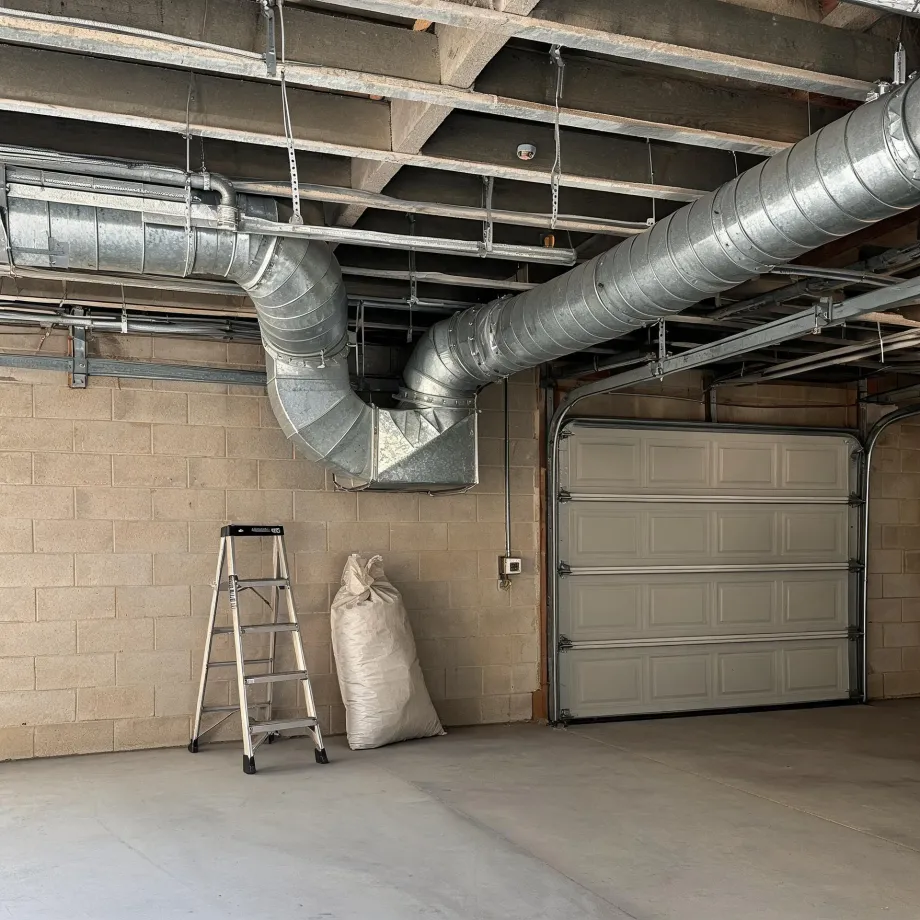
Furnaces running in Liberty County's older housing stock have logged a long service history before any repair call reaches a contractor. Half the homes in Liberty County, Georgia were built in 1994 or earlier (2020-2024 ACS 5-year). A system that has run through that many seasons accumulates specific failures: heat exchangers crack, ignitors degrade, limit switches fail from repeated thermal cycling. Those are the components a contractor opens the unit to inspect, and whether replacement parts for that equipment are still in the supply chain is the question that shapes the repair bill as much as the labor does.
The Parts of a Furnace a Contractor Checks First
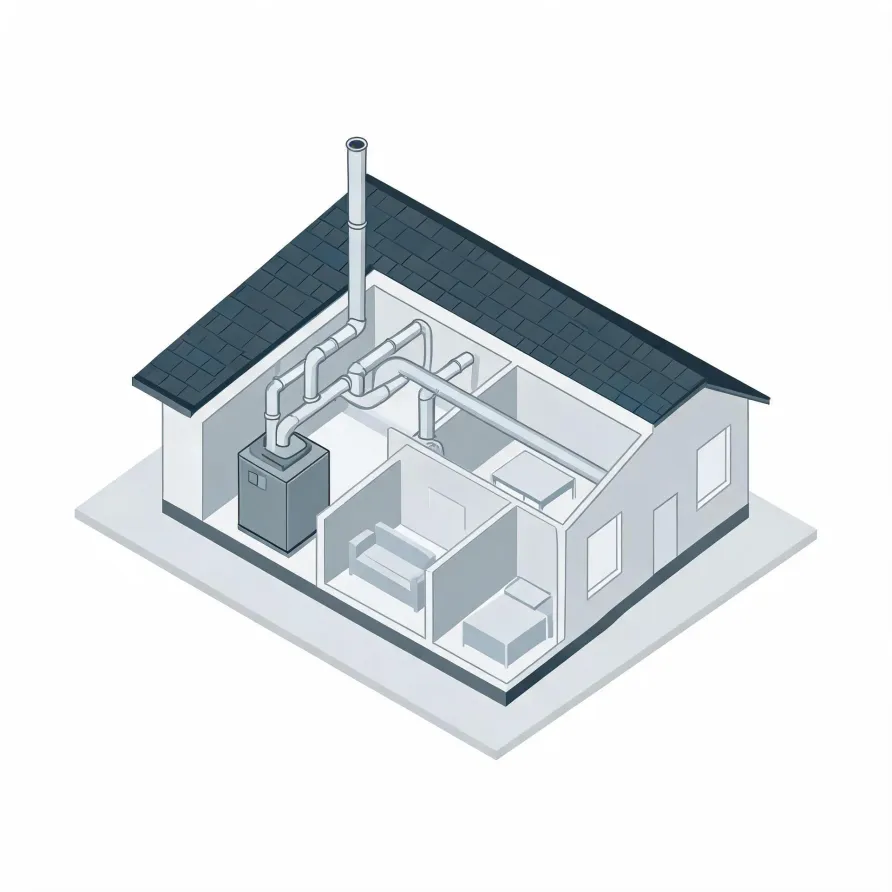
The furnace itself sits in a utility space, basement, or closet and is the unit a contractor opens first. Inside it, the heat exchanger and burner assembly are where most failures show up. A cracked heat exchanger, a failed igniter, or a faulty burner will each produce distinct symptoms that point the contractor to that component.
The blower motor pushes conditioned air through the system and sits in the lower section of the furnace cabinet. The flue pipe runs from the unit to an exterior vent and carries combustion gases out of the house. The thermostat, mounted on a wall inside the living space, tells the system when to fire and is a frequent first stop when the furnace runs poorly or not at all.
The drawing shows a general layout of the system, and a licensed contractor determines which components apply to your specific house and situation.
Get matched in Liberty CountyLiberty County, Georgia, by the numbers
128 severe weather events were recorded in Liberty County, Georgia between 2015 and 2024.
NOAA National Centers for Environmental Information, Storm Events Database, bulk CSV export, events 2015-01-01 through 2024-12-31.Half the homes in Liberty County, Georgia were built in 1994 or earlier (2020-2024 ACS 5-year).
U.S. Census Bureau, 2020-2024 American Community Survey 5-Year EstimatesLiberty County, Georgia holds 27,675 housing units (2020-2024 ACS 5-year).
U.S. Census Bureau, 2020-2024 American Community Survey 5-Year EstimatesOwners occupy 50.9% of the occupied homes in Liberty County, Georgia (2020-2024 ACS 5-year).
U.S. Census Bureau, 2020-2024 American Community Survey 5-Year EstimatesCodes & Standards Covering Furnace Repair in Liberty County, Georgia4 sourced rules and standards
What HVAC Repair Looks Like in Liberty County
Non-weatherized gas furnaces manufactured on or after November 19, 2015 must reach 80.0 percent AFUE.
Non-weatherized oil-fired furnaces manufactured on or after November 19, 2015 must reach 83.0 percent AFUE.
Mobile home gas furnaces manufactured on or after November 19, 2015 must reach 80.0 percent AFUE.
Non-weatherized gas furnaces manufactured on or after December 18, 2028 must reach 95.0 percent AFUE, up from the 80.0 percent minimum that applies to units manufactured before that date.
Severe Weather Events in Liberty County
Hard weather puts furnaces to work in ways that steady mild winters never do. How much stress local conditions place on heating equipment is a Liberty County question, which is why the repair picture here looks different from the state average.
128 severe weather events, 2015–2024. Source: NOAA National Centers for Environmental Information, Storm Events Database.