Tell us about the job
Takes about a minute. No obligation.
A contractor quoting a furnace repair in Muscogee County starts with the basics: how old the heat exchanger is, whether the filters have been changed, whether the igniter has ever been cleaned. 74 severe weather events were recorded in Muscogee County, Georgia between 2015 and 2024. At that rate, severe weather is a real but not dominant factor in what wears out first. Age and maintenance gaps are what a contractor finds at the root of most failures here, and those show up plainly in what the opened unit reveals.
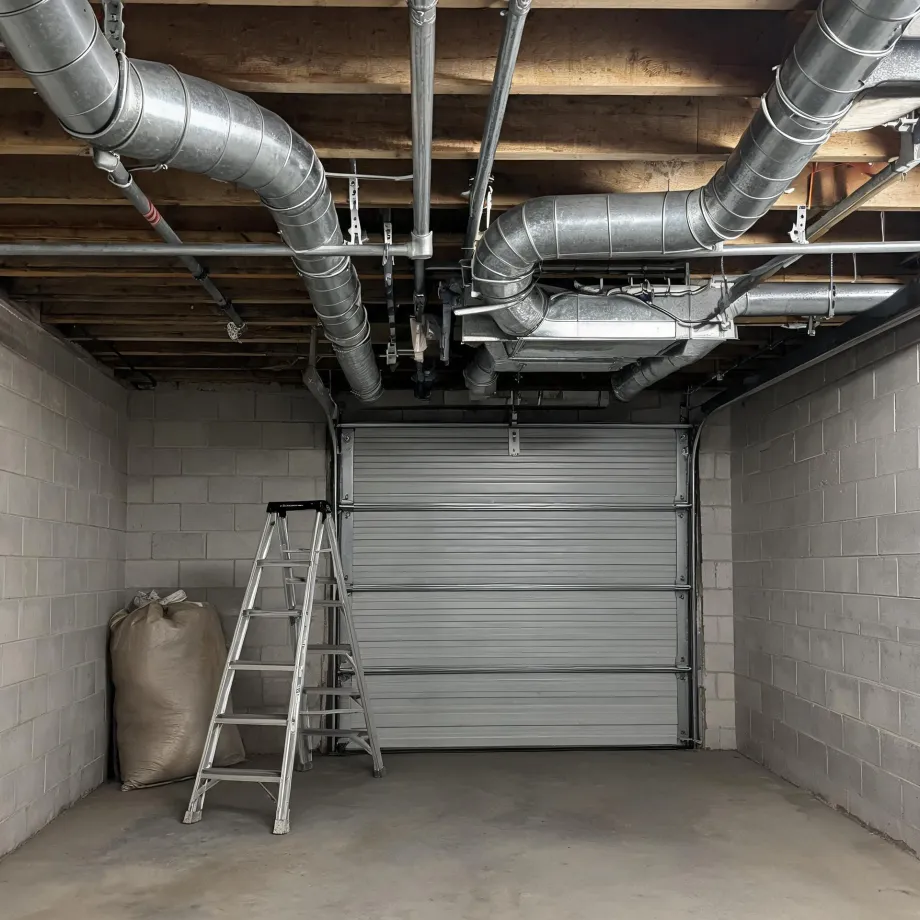
Ductwork in a house this old was designed around equipment that manufacturers stopped making long before the current furnace went in. Half the homes in Muscogee County, Georgia were built in 1978 or earlier (2020-2024 ACS 5-year). When a contractor opens a furnace in stock like this, the repair path splits early: the fault itself may be straightforward, but sourcing the parts a system of that age requires is its own problem. Replacement components for older furnace models are sometimes discontinued, sometimes available only through specialty suppliers, and sometimes simply gone. The fault diagnosis is one job. Getting the right part to finish it is another.
The Parts of a Furnace a Contractor Checks First
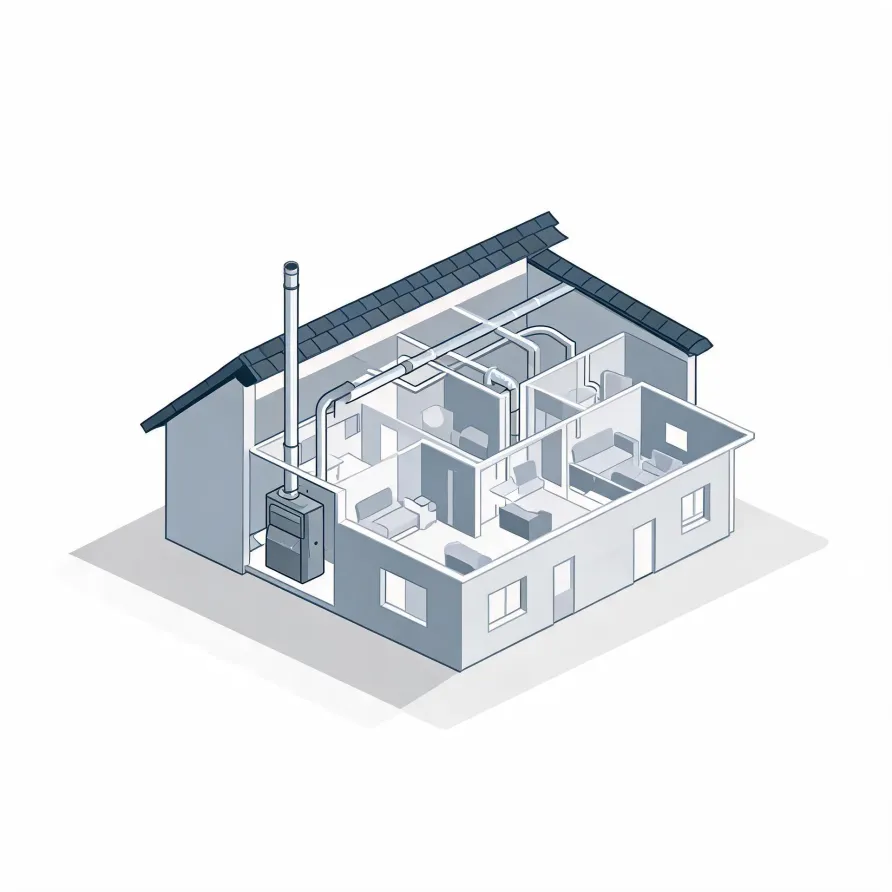
The furnace itself sits in the basement, utility room, or closet and is the piece a contractor goes to first. Inside it, the heat exchanger and burner assembly are the usual suspects when something is wrong. A cracked heat exchanger or a failed burner shows up as no heat, weak heat, or a unit that starts and then shuts back down.
The blower motor pushes conditioned air through the house and sits inside the furnace cabinet. The flue and venting carry combustion gases out and run from the unit up through the roof or out a side wall. The thermostat on the wall is the control side of the system, and a wiring or sensor fault there can mimic a problem deeper in the equipment.
The drawing shows a general layout of the system, and a licensed contractor determines what applies to the specific equipment and configuration in your house.
Get matched in Muscogee CountyMuscogee County, by the numbers
74 severe weather events were recorded in Muscogee County, Georgia between 2015 and 2024.
NOAA National Centers for Environmental Information, Storm Events Database, bulk CSV export, events 2015-01-01 through 2024-12-31.Half the homes in Muscogee County, Georgia were built in 1978 or earlier (2020-2024 ACS 5-year).
U.S. Census Bureau, 2020-2024 American Community Survey 5-Year EstimatesMuscogee County, Georgia holds 92,031 housing units (2020-2024 ACS 5-year).
U.S. Census Bureau, 2020-2024 American Community Survey 5-Year EstimatesOwners occupy 50.8% of the occupied homes in Muscogee County, Georgia (2020-2024 ACS 5-year).
U.S. Census Bureau, 2020-2024 American Community Survey 5-Year EstimatesCodes & Standards Governing Furnace and HVAC Repair in Muscogee County, Georgia4 sourced rules and standards
What the repair visit looks like
Non-weatherized gas furnaces manufactured on or after November 19, 2015 must reach 80.0 percent AFUE.
Non-weatherized oil-fired furnaces manufactured on or after November 19, 2015 must reach 83.0 percent AFUE.
Mobile home gas furnaces manufactured on or after November 19, 2015 must reach 80.0 percent AFUE.
Non-weatherized gas furnaces manufactured on or after December 18, 2028 must reach 95.0 percent AFUE, up from the 80.0 percent minimum that applies to units manufactured before that date.
Severe Weather Events in Muscogee County
Extreme weather puts real strain on furnace systems, forcing them to run harder and longer than they were sized for. How much of that pressure a furnace in Muscogee County faces is a local question, and the data below reflects the conditions contractors here work around.
74 severe weather events, 2015–2024. Source: NOAA National Centers for Environmental Information, Storm Events Database.