Tell us about the job
Takes about a minute. No obligation.
A furnace breaking down in Marion County almost always traces back to the equipment itself rather than to what the weather has put it through. 27 severe weather events were recorded in Marion County, Georgia between 2015 and 2024. At that rate, severe weather is an occasional event here, not a standing pressure on every system in the county. A contractor quoting a furnace repair will look at the heat exchanger, the igniter, and the age of the unit before they consider outdoor conditions as a factor. The load this climate places on heating equipment is real but modest, and when a furnace fails, deferred maintenance or a poor original install is the likelier culprit.
Half the homes in Marion County, Georgia were built in 1993 or earlier (2020-2024 ACS 5-year). A furnace that has been running in a house of this vintage has accumulated a specific kind of wear: igniters that have cycled past their limit, heat exchangers that have developed stress fractures, and burner assemblies whose OEM replacement parts a contractor may have to source from secondary suppliers because the original manufacturer stopped making them. That is what a contractor finds once the unit is open, and it is what decides whether the repair is a straightforward parts swap or a longer conversation about what is still available.
The Parts of a Furnace a Contractor Checks First
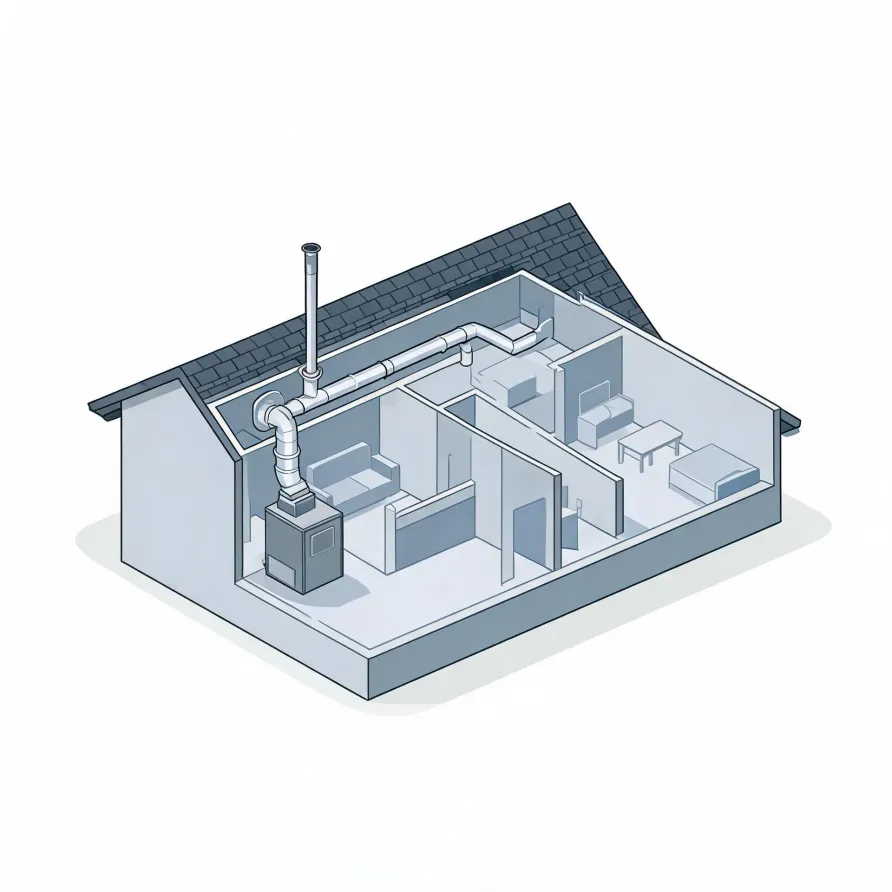
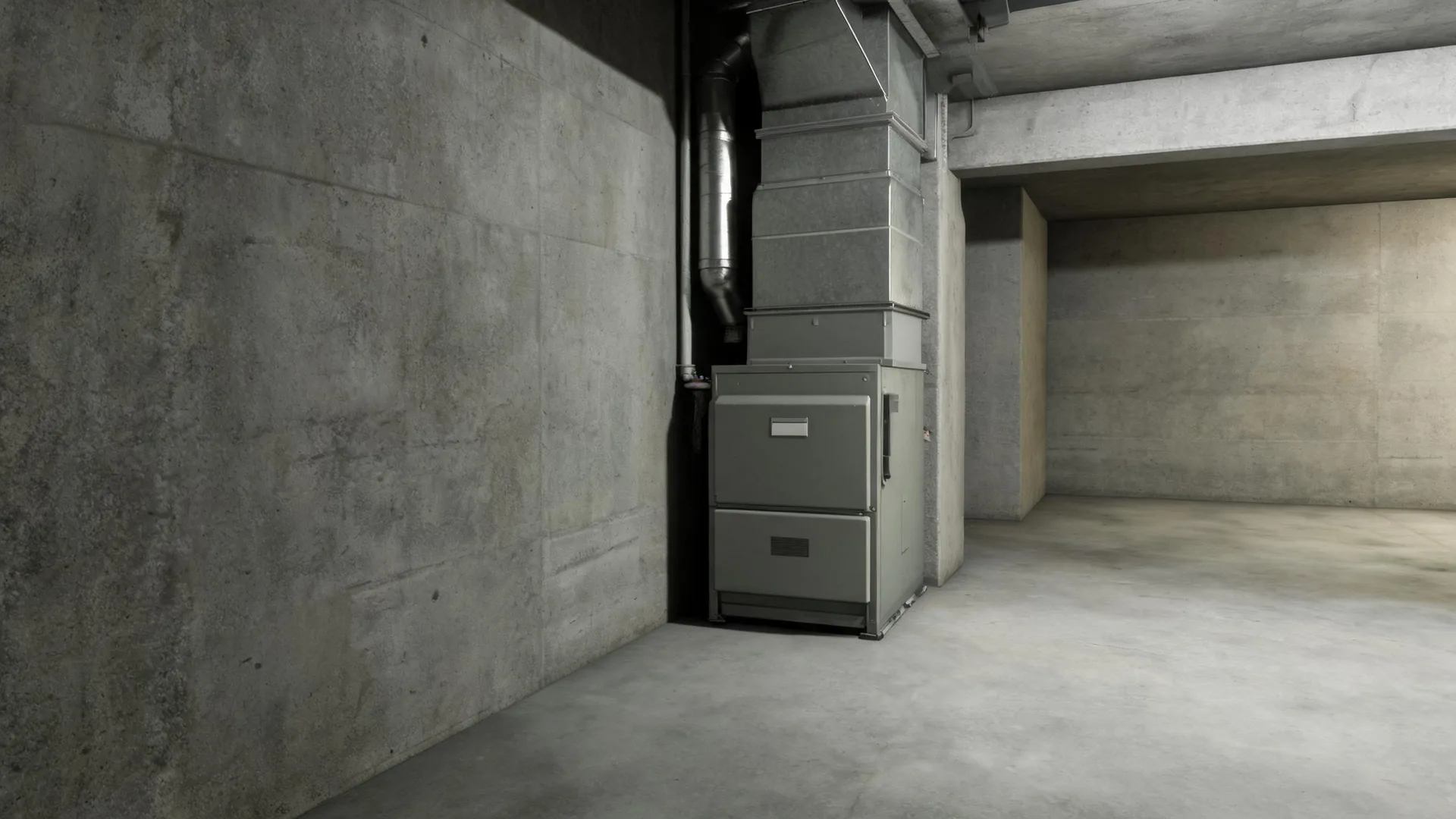
The furnace itself sits in a mechanical room, basement, or utility closet and is the piece a contractor goes to first. Inside it, the heat exchanger and burner assembly are the parts most likely behind a heating failure. A cracked heat exchanger, a dirty burner, or a failed igniter each shows up differently but all start there.
The blower motor and its fan wheel sit at the base of the furnace cabinet and push conditioned air out through the supply side of the house. The flue pipe runs from the top of the furnace to an exterior wall or roof and carries combustion gases out. The filter housing sits at the air return, just before air enters the unit.
The drawing shows the general layout of a furnace system, and a licensed contractor determines which components apply to the specific setup in your home.
Get matched in Marion CountyMarion County by the Numbers
27 severe weather events were recorded in Marion County, Georgia between 2015 and 2024.
NOAA National Centers for Environmental Information, Storm Events Database, bulk CSV export, events 2015-01-01 through 2024-12-31.Half the homes in Marion County, Georgia were built in 1993 or earlier (2020-2024 ACS 5-year).
U.S. Census Bureau, 2020-2024 American Community Survey 5-Year EstimatesMarion County, Georgia holds 3,544 housing units (2020-2024 ACS 5-year).
U.S. Census Bureau, 2020-2024 American Community Survey 5-Year EstimatesOwners occupy 78.9% of the occupied homes in Marion County, Georgia (2020-2024 ACS 5-year).
U.S. Census Bureau, 2020-2024 American Community Survey 5-Year EstimatesCodes & Standards Governing Furnace Repair in Marion County, Georgia4 sourced rules and standards
What HVAC Repair Looks Like in Marion County
Non-weatherized gas furnaces manufactured on or after November 19, 2015 must reach 80.0 percent AFUE.
Non-weatherized oil-fired furnaces manufactured on or after November 19, 2015 must reach 83.0 percent AFUE.
Mobile home gas furnaces manufactured on or after November 19, 2015 must reach 80.0 percent AFUE.
Non-weatherized gas furnaces manufactured on or after December 18, 2028 must reach 95.0 percent AFUE, up from the 80.0 percent minimum that applies to units manufactured before that date.
Severe Weather Events in Marion County
Extreme weather puts furnaces under stress that ordinary use does not. How hard the equipment in Marion County works, and how often it fails, is tied directly to what the local climate demands of it.
27 severe weather events, 2015–2024. Source: NOAA National Centers for Environmental Information, Storm Events Database.