Tell us about the job
Takes about a minute. No obligation.
A contractor quoting furnace repair in this county starts with the system's service history and the condition of its heat exchanger, igniter, and controls, because those are where failures show up when a unit has simply been run hard for years without attention. 87 severe weather events were recorded in Fayette County, Georgia between 2015 and 2024. At that rate, severe weather is an occasional event here, not a standing condition, so a furnace that is failing is almost certainly failing for reasons a contractor can trace directly: worn parts, a filter that went too long, or an install that was never quite right. The weather record does not carry the weight of explaining what went wrong.
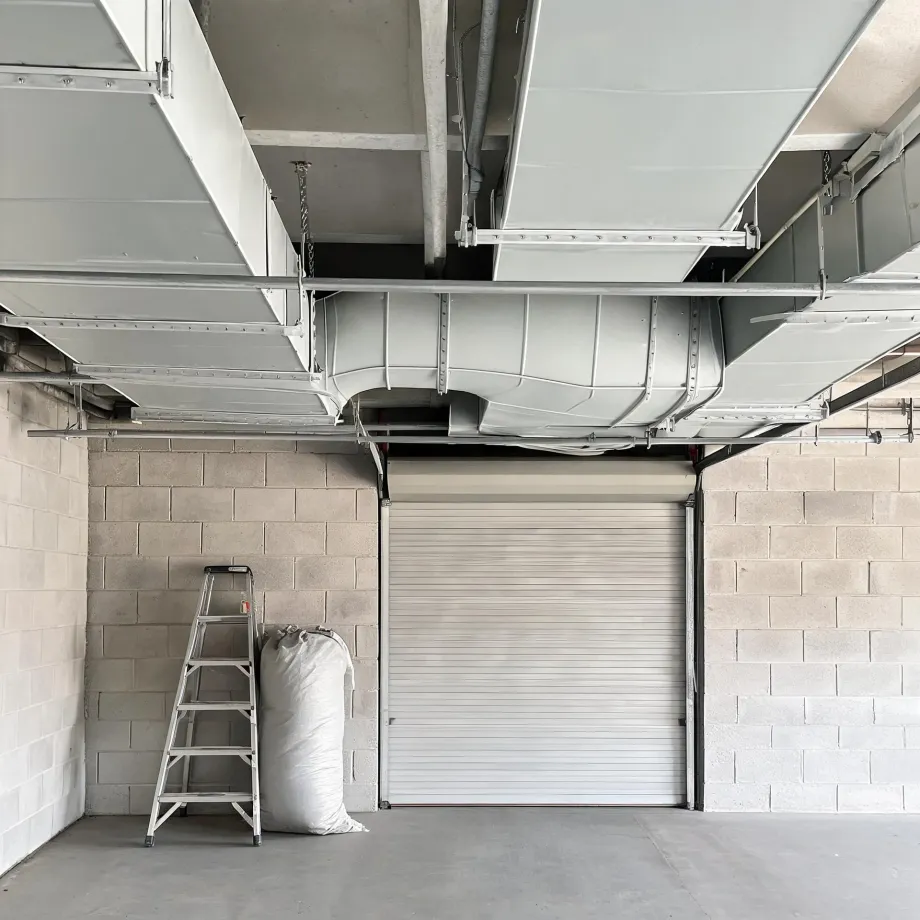
Older ductwork bends and seals around whatever furnace was last swapped in, and that furnace is rarely the original one. Half the homes in Fayette County, Georgia were built in 1993 or earlier (2020-2024 ACS 5-year). Each replacement narrows the parts pool a contractor can draw on, and a system a few generations removed from what the house was built for often runs on components that take real sourcing effort to find. When a contractor opens a furnace here, the question is not just what failed but whether the part that failed is still being made.
The Parts of a Furnace a Contractor Checks First
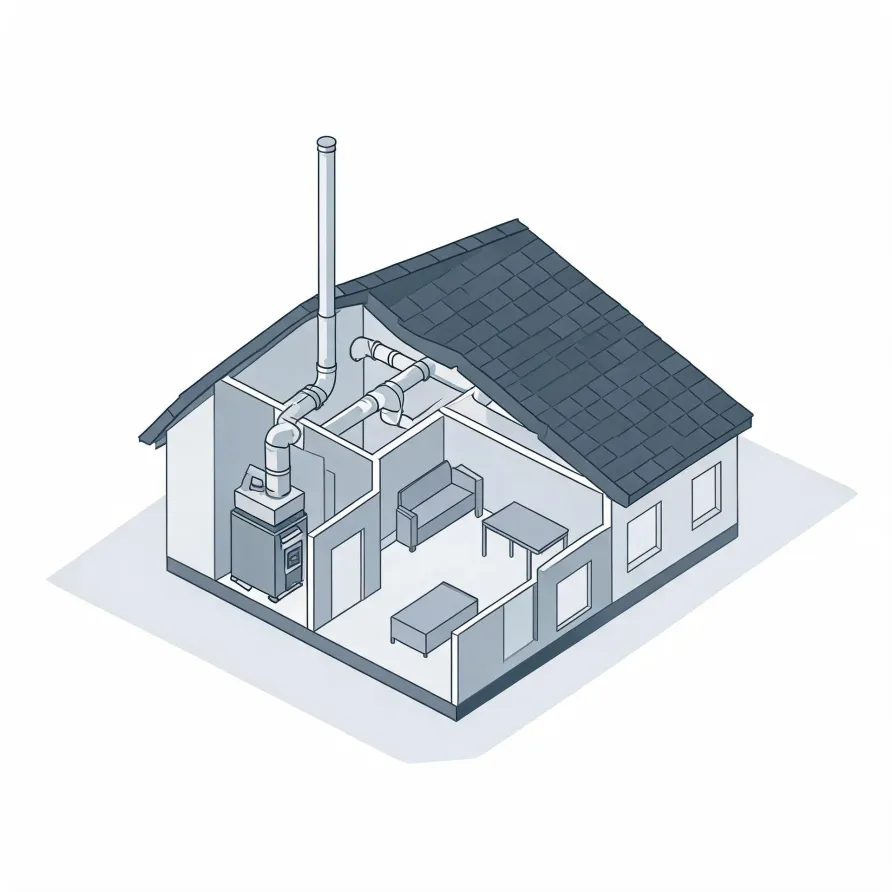
The furnace itself sits in the basement, utility room, or closet and is the piece a contractor goes to first. Inside it, the heat exchanger is where combustion heat passes into the air supply, and a crack or failure there is what makes a furnace blow cold or trip the system off entirely. The burners, igniter, and flame sensor all sit inside that same cabinet and are the first components pulled and inspected when the furnace fails to fire.
The blower motor and its fan wheel sit at the base of the furnace cabinet and push conditioned air out through the supply side of the house. The flue pipe runs from the top of the furnace to an outside vent, carrying combustion gases out, and a blocked or corroded flue is a common reason a furnace shuts down on a safety lockout. The thermostat on the wall connects to all of it and is the first thing a contractor tests before opening the cabinet.
The drawing shows a typical furnace layout, and a licensed contractor determines which components apply to the specific system in your home.
Get matched in Fayette CountyFayette County, by the numbers
87 severe weather events were recorded in Fayette County, Georgia between 2015 and 2024.
NOAA National Centers for Environmental Information, Storm Events Database, bulk CSV export, events 2015-01-01 through 2024-12-31.Half the homes in Fayette County, Georgia were built in 1993 or earlier (2020-2024 ACS 5-year).
U.S. Census Bureau, 2020-2024 American Community Survey 5-Year EstimatesFayette County, Georgia holds 46,453 housing units (2020-2024 ACS 5-year).
U.S. Census Bureau, 2020-2024 American Community Survey 5-Year EstimatesOwners occupy 80.1% of the occupied homes in Fayette County, Georgia (2020-2024 ACS 5-year).
U.S. Census Bureau, 2020-2024 American Community Survey 5-Year EstimatesCodes & Standards Covering Furnace Repair in Fayette County, Georgia4 sourced rules and standards
What happens when a contractor comes out for HVAC repair in Fayette County
Non-weatherized gas furnaces manufactured on or after November 19, 2015 must reach 80.0 percent AFUE.
Non-weatherized oil-fired furnaces manufactured on or after November 19, 2015 must reach 83.0 percent AFUE.
Mobile home gas furnaces manufactured on or after November 19, 2015 must reach 80.0 percent AFUE.
Non-weatherized gas furnaces manufactured on or after December 18, 2028 must reach 95.0 percent AFUE, up from the 80.0 percent minimum that applies to units manufactured before that date.
Severe Weather Events in Fayette County
Extreme weather puts real stress on furnace components, and how hard a system works over its life is shaped by local conditions. That load history is part of why repair needs in Fayette County look different from the next county over.
87 severe weather events, 2015–2024. Source: NOAA National Centers for Environmental Information, Storm Events Database.