Tell us about the job
Takes about a minute. No obligation.
A furnace in Murray County that stops working in January is almost certainly failing for reasons a contractor finds inside the unit: a cracked heat exchanger, a worn igniter, or a blower motor that has run past its useful life. 55 severe weather events were recorded in Murray County, Georgia between 2015 and 2024. At that rate, severe weather is an occasional fact of life here, not a persistent mechanical load, so a contractor diagnosing a repair does not start by accounting for storm wear. What they look for first is deferred maintenance and age. Those two factors explain the overwhelming share of furnace failures in this county, and a contractor's quote reflects that.
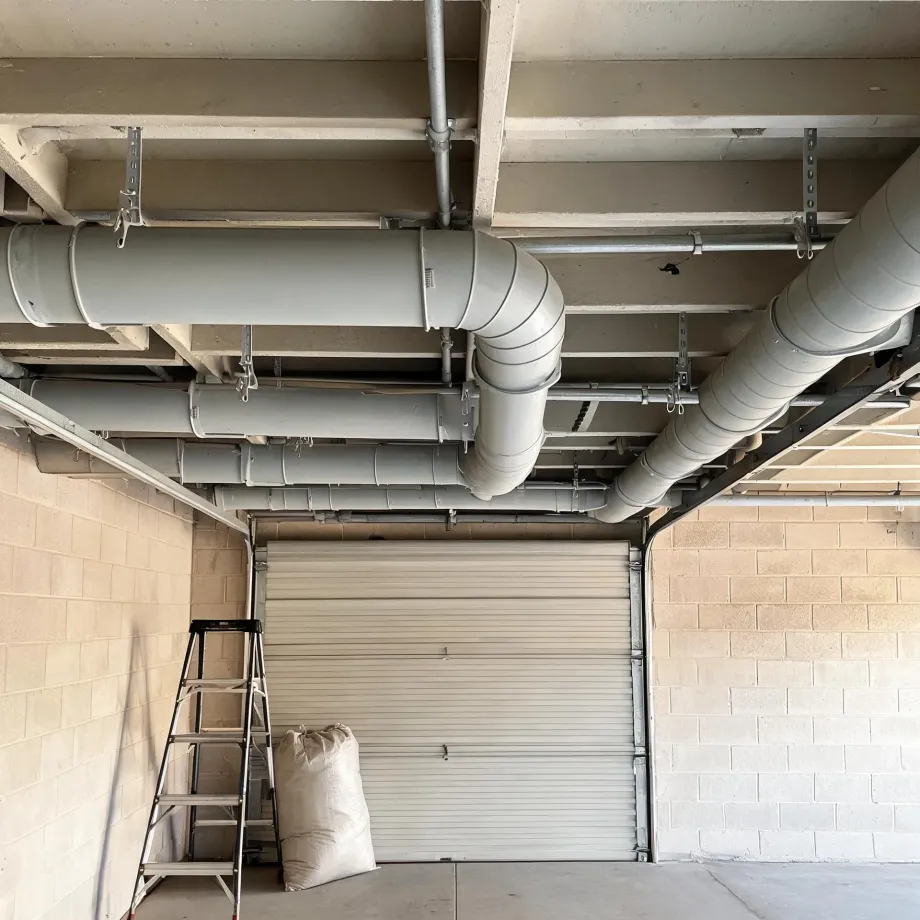
Half the homes in Murray County, Georgia were built in 1993 or earlier (2020-2024 ACS 5-year). A house built around that time has ductwork and wiring that have aged with every furnace it has run. When a repair technician opens a furnace in stock like this, the condition of the heat exchanger and ignition components matters, but so does what the surrounding system has been doing to airflow and load for just as long. Parts that were marginal before the call become the explanation for the failure on the table.
The Parts of a Furnace a Contractor Checks First
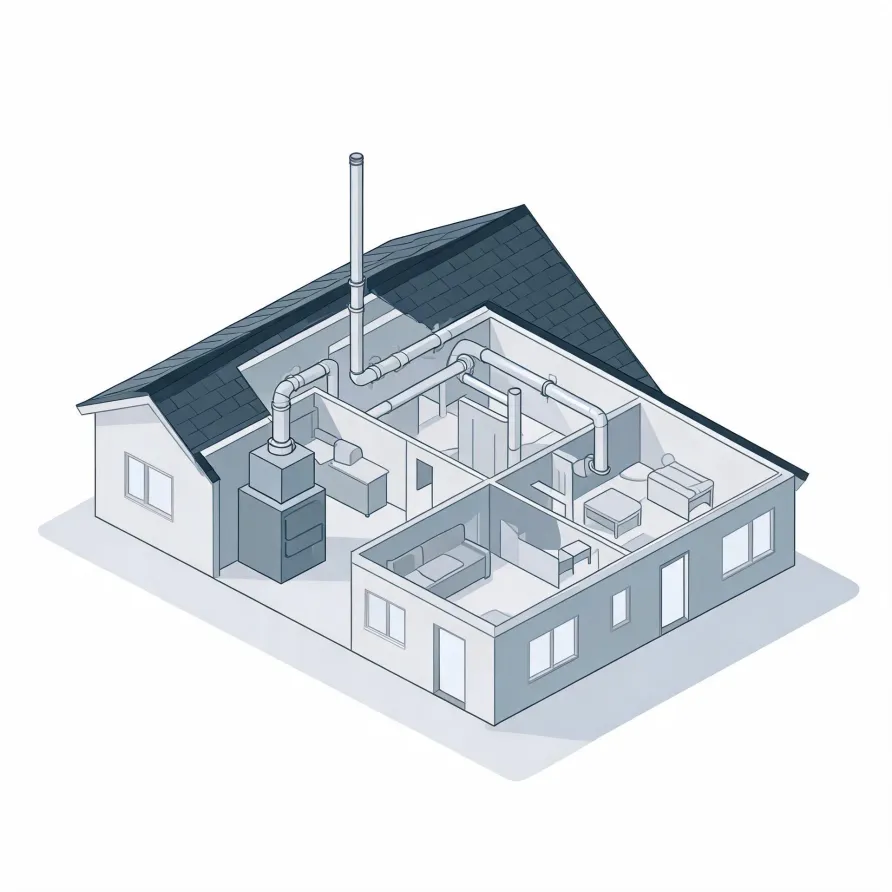
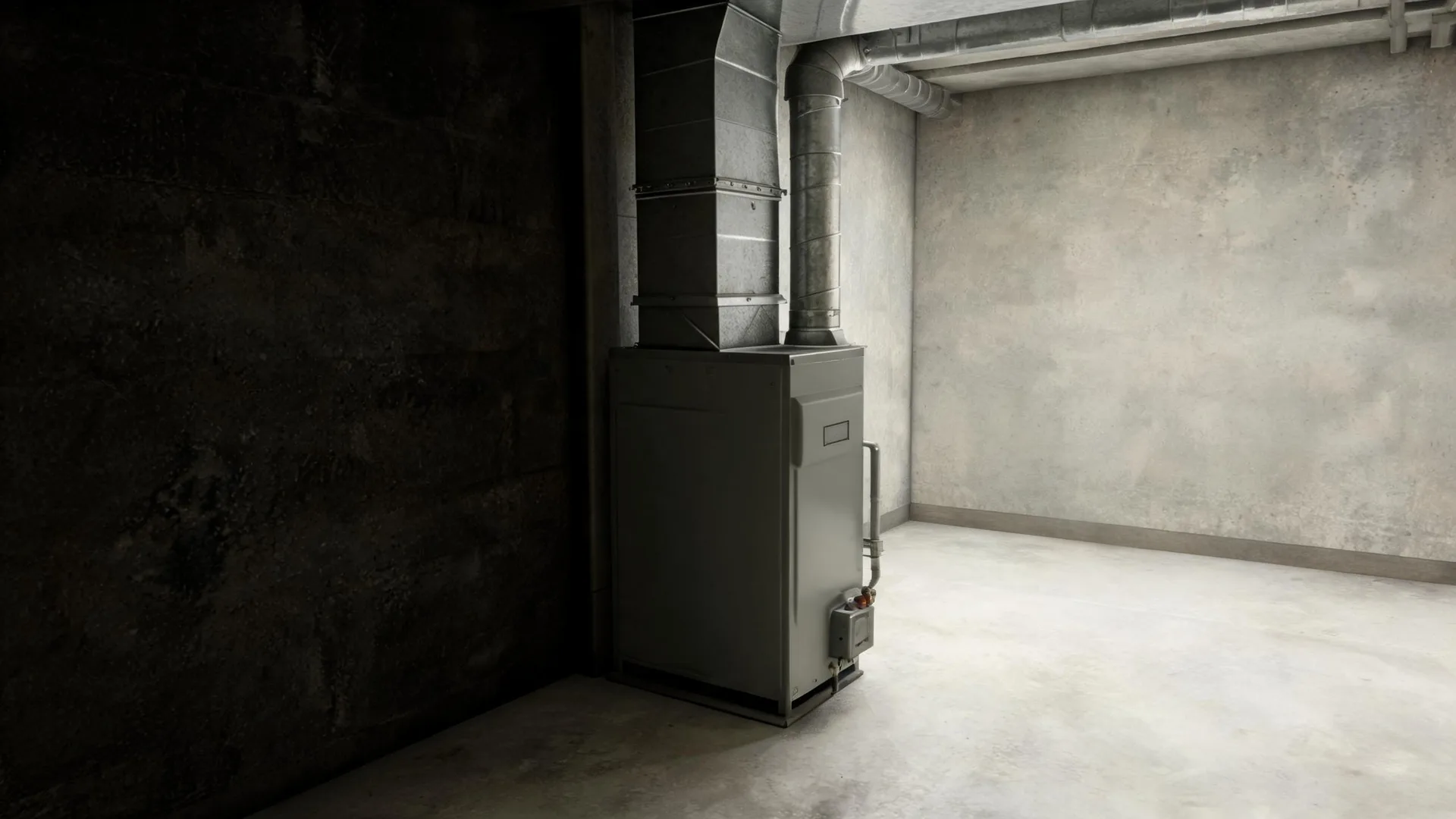
The furnace itself sits in the basement, utility closet, or mechanical room and is the piece a contractor goes to first. Inside it, the heat exchanger is the part that does the actual work of warming air, and a crack or failure there is a common reason a furnace stops performing. The burners, which fire inside that exchanger, are checked closely alongside it.
The blower motor sits inside the furnace cabinet and pushes conditioned air out through the house. The flue pipe runs from the cabinet up and out of the building, and a blockage or breach there shows up as a performance or safety problem. The thermostat on the wall is the last piece a contractor checks, since a wiring fault or a failed sensor there can mimic a deeper mechanical problem.
The drawing shows a typical furnace layout, and a licensed contractor determines which components apply to your specific house and situation.
Get matched in Murray CountyMurray County, Georgia, by the numbers
55 severe weather events were recorded in Murray County, Georgia between 2015 and 2024.
NOAA National Centers for Environmental Information, Storm Events Database, bulk CSV export, events 2015-01-01 through 2024-12-31.Half the homes in Murray County, Georgia were built in 1993 or earlier (2020-2024 ACS 5-year).
U.S. Census Bureau, 2020-2024 American Community Survey 5-Year EstimatesMurray County, Georgia holds 16,241 housing units (2020-2024 ACS 5-year).
U.S. Census Bureau, 2020-2024 American Community Survey 5-Year EstimatesOwners occupy 73.8% of the occupied homes in Murray County, Georgia (2020-2024 ACS 5-year).
U.S. Census Bureau, 2020-2024 American Community Survey 5-Year EstimatesCodes & Licensing That Govern Furnace and HVAC Repair in Murray County, Georgia4 sourced rules and standards
What the repair visit looks like
Non-weatherized gas furnaces manufactured on or after November 19, 2015 must reach 80.0 percent AFUE.
Non-weatherized oil-fired furnaces manufactured on or after November 19, 2015 must reach 83.0 percent AFUE.
Mobile home gas furnaces manufactured on or after November 19, 2015 must reach 80.0 percent AFUE.
Non-weatherized gas furnaces manufactured on or after December 18, 2028 must reach 95.0 percent AFUE, up from the 80.0 percent minimum that applies to units manufactured before that date.
Severe Weather Events in Murray County
Weather in Murray County puts real demand on heating equipment. What happens outside drives how hard a furnace works and how often it needs attention, which is why local repair work is shaped by local conditions.
55 severe weather events, 2015–2024. Source: NOAA National Centers for Environmental Information, Storm Events Database.