Tell us about the job
Takes about a minute. No obligation.
Sizing a furnace for a Chatham County home starts with understanding what the equipment will run against, not just what it needs to move on a cold morning. 343 severe weather events were recorded in Chatham County, Georgia between 2015 and 2024. At that rate, severe weather is part of the normal operating environment, and a contractor who ignores it when selecting equipment capacity, specifying components, or planning ductwork connections is installing for a place that does not exist. The install has to hold up to what this area actually delivers.
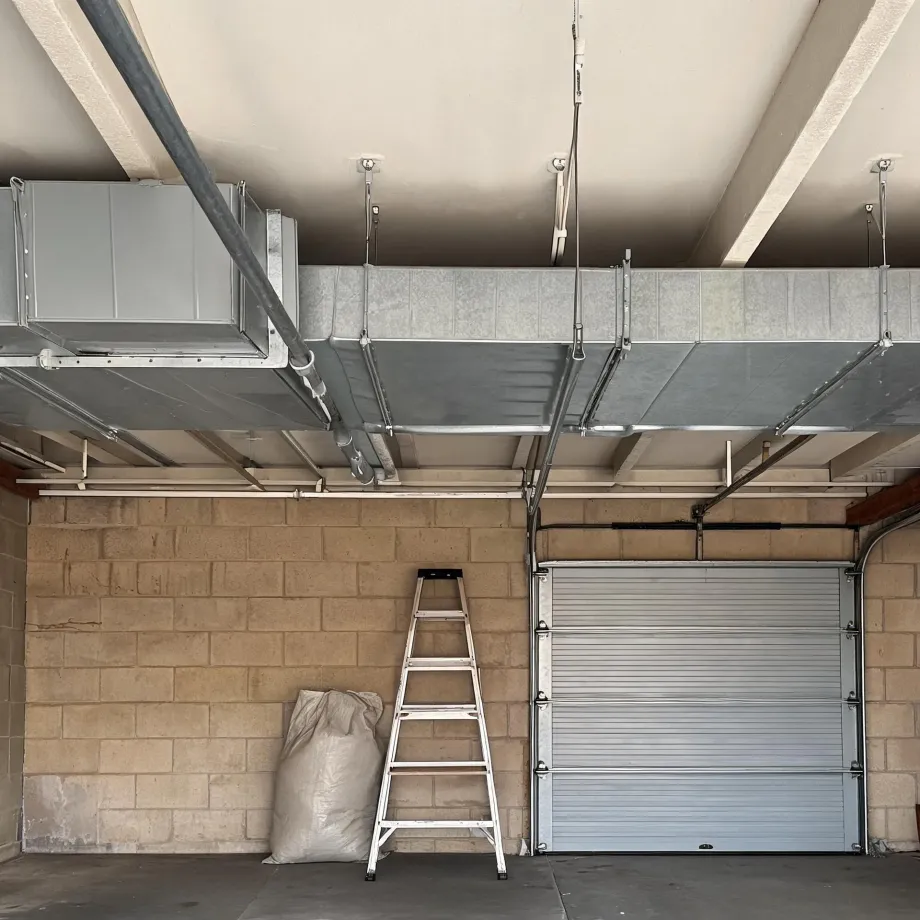
Ductwork laid down for equipment from a previous generation often runs in sizes and configurations a modern furnace was not designed to push air through. Half the homes in Chatham County, Georgia were built in 1986 or earlier (2020-2024 ACS 5-year). That means a contractor quoting a furnace installation here has to assess the existing duct system before the new unit can be priced with any accuracy. If the trunk lines and branches can carry the load, the job is a replacement. If they cannot, the scope and the bill change. The electrical service gets the same look, since modern furnaces draw differently than what those panels were originally configured to support.
What a Furnace Installation Covers
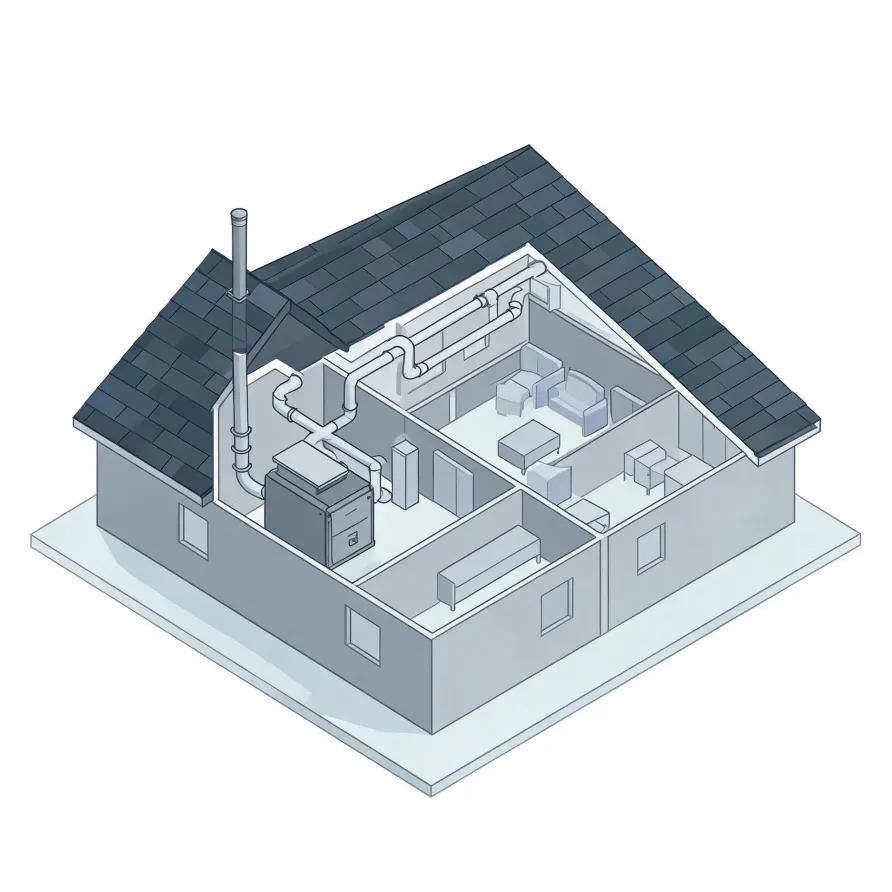
The furnace itself sits in a mechanical room, basement, or utility closet and is the unit a homeowner is most likely to already know by name. It draws in air, heats it, and pushes it into the duct system. Alongside it, or mounted just above it, the air handler moves that conditioned air through the house.
The thermostat goes on an interior wall and is the control point for the whole system, telling the furnace when to fire and when to stop. A flue or venting pipe runs from the furnace to an exterior wall or up through the roof, carrying combustion gases out of the home.
The drawing shows a typical layout, and a licensed contractor determines what applies to this particular house based on how it is built and what is already in place.
Get matched in Chatham CountyChatham County, by the numbers
343 severe weather events were recorded in Chatham County, Georgia between 2015 and 2024.
NOAA National Centers for Environmental Information, Storm Events Database, bulk CSV export, events 2015-01-01 through 2024-12-31.Half the homes in Chatham County, Georgia were built in 1986 or earlier (2020-2024 ACS 5-year).
U.S. Census Bureau, 2020-2024 American Community Survey 5-Year EstimatesChatham County, Georgia holds 137,532 housing units (2020-2024 ACS 5-year).
U.S. Census Bureau, 2020-2024 American Community Survey 5-Year EstimatesOwners occupy 56.8% of the occupied homes in Chatham County, Georgia (2020-2024 ACS 5-year).
U.S. Census Bureau, 2020-2024 American Community Survey 5-Year EstimatesFurnace & HVAC Installation Rules for Chatham County, Georgia4 sourced standards & codes
What happens on installation day
Non-weatherized gas furnaces manufactured on or after November 19, 2015 must reach 80.0 percent AFUE.
Non-weatherized oil-fired furnaces manufactured on or after November 19, 2015 must reach 83.0 percent AFUE.
Mobile home gas furnaces manufactured on or after November 19, 2015 must reach 80.0 percent AFUE.
Non-weatherized gas furnaces manufactured on or after December 18, 2028 must reach 95.0 percent AFUE, up from the 80.0 percent minimum that applies to units manufactured before that date.
Severe Weather Events in Chatham County
Local weather puts real load on heating and cooling equipment, and that load shapes what a furnace needs to handle over its life. Knowing what this area sees is part of sizing and installing equipment that holds up.
343 severe weather events, 2015–2024. Source: NOAA National Centers for Environmental Information, Storm Events Database.