Tell us about the job
Takes about a minute. No obligation.
A furnace quote in Hall County starts with what the climate actually asks of the equipment, not with a catalog default. 106 severe weather events were recorded in Hall County, Georgia between 2015 and 2024. At that rate, severe weather is a standing condition, and a contractor sizing a new furnace here has to build that load into every decision: duct sizing, equipment capacity, how tightly the system is sealed against the conditions it will run through. A unit specified for a gentler environment will cycle harder, recover slower, and wear its heat exchanger faster than the spec sheet predicted.
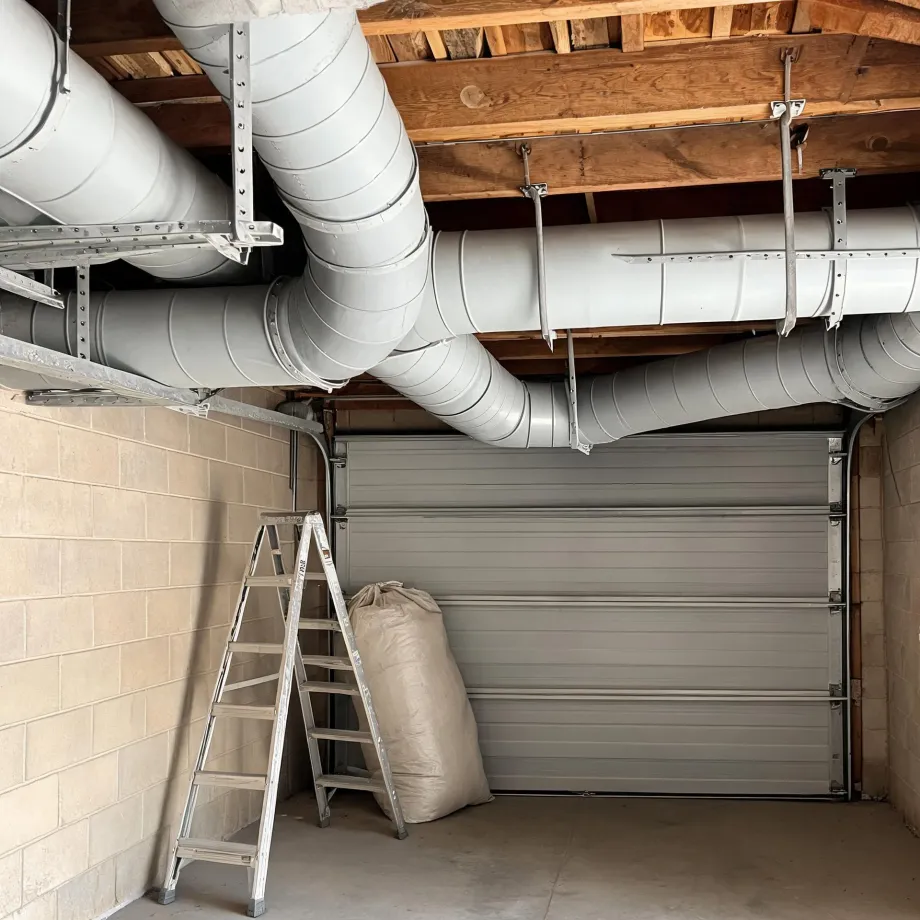
Existing ductwork is what a furnace installation in Hall County actually hinges on. Half the homes in Hall County, Georgia were built in 1996 or earlier (2020-2024 ACS 5-year). Houses built in that era were ducted for systems with different airflow demands, and what is already in the walls and ceiling may not distribute heat the way a current unit needs. A contractor has to assess whether the existing runs, trunk lines, and return capacity are adequate before the new equipment is even priced. If they are not, the duct work becomes part of the job.
What a Furnace Installation Puts in Your Home
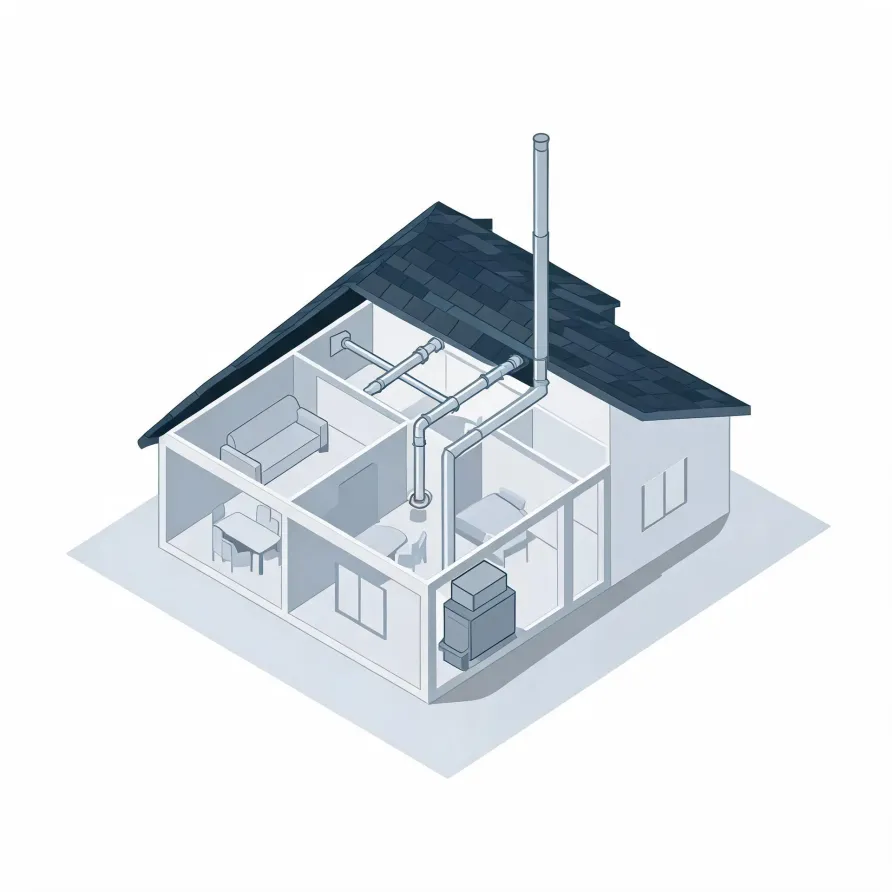
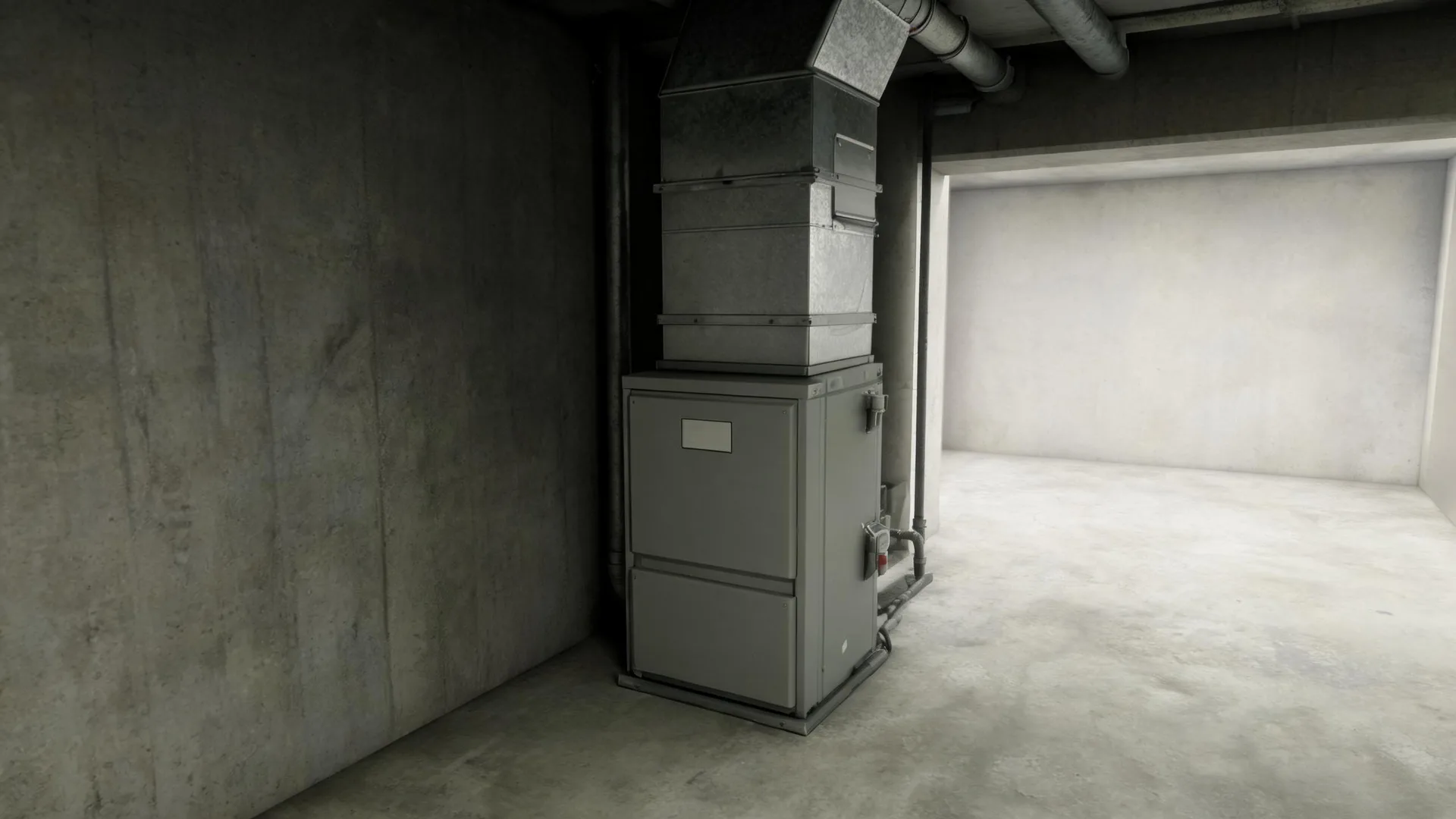
The furnace itself sits inside the house, almost always in a basement, utility closet, or dedicated mechanical room. It holds the burner assembly, the heat exchanger, and the blower that moves conditioned air through the house. A new installation means all of those components arrive as a unit and get set into that space.
The flue pipe runs from the furnace to an exterior wall or through the roof, carrying combustion gases out of the house. The thermostat mounts on an interior wall and serves as the control point for the whole system. A new furnace also comes with a filter housing, positioned where the return air enters the unit.
The drawing alongside this text shows the general layout of these components, and a licensed contractor determines exactly how each one applies to your home.
Get matched in Hall CountyHall County, Georgia, by the numbers
106 severe weather events were recorded in Hall County, Georgia between 2015 and 2024.
NOAA National Centers for Environmental Information, Storm Events Database, bulk CSV export, events 2015-01-01 through 2024-12-31.Half the homes in Hall County, Georgia were built in 1996 or earlier (2020-2024 ACS 5-year).
U.S. Census Bureau, 2020-2024 American Community Survey 5-Year EstimatesHall County, Georgia holds 80,926 housing units (2020-2024 ACS 5-year).
U.S. Census Bureau, 2020-2024 American Community Survey 5-Year EstimatesOwners occupy 68.6% of the occupied homes in Hall County, Georgia (2020-2024 ACS 5-year).
U.S. Census Bureau, 2020-2024 American Community Survey 5-Year EstimatesFurnace & HVAC Installation Rules for Hall County, Georgia4 codes & standards
What the installation actually looks like
Non-weatherized gas furnaces manufactured on or after November 19, 2015 must reach 80.0 percent AFUE.
Non-weatherized oil-fired furnaces manufactured on or after November 19, 2015 must reach 83.0 percent AFUE.
Mobile home gas furnaces manufactured on or after November 19, 2015 must reach 80.0 percent AFUE.
Non-weatherized gas furnaces manufactured on or after December 18, 2028 must reach 95.0 percent AFUE, up from the 80.0 percent minimum that applies to units manufactured before that date.
Severe Weather Events in Hall County
Hall County's climate puts real demands on heating and cooling equipment over its working life. How hard the weather pushes here shapes what a furnace installation needs to hold up to, which makes local conditions a practical part of the conversation.
106 severe weather events, 2015–2024. Source: NOAA National Centers for Environmental Information, Storm Events Database.