Tell us about the job
Takes about a minute. No obligation.
A contractor quoting a furnace installation in Dawson County is not sizing against a brutal weather history. 58 severe weather events were recorded in Dawson County, Georgia between 2015 and 2024. At roughly that rate, severe weather is an occasional event here rather than a steady operating condition, which means the decisions that determine how a furnace performs are the ones the contractor controls: accurate load calculations for the structure, equipment suited to the home's square footage and layout, and installation quality that holds up through ordinary seasonal demand. Poor sizing or a sloppy install will cause problems that the weather record cannot explain and cannot excuse.
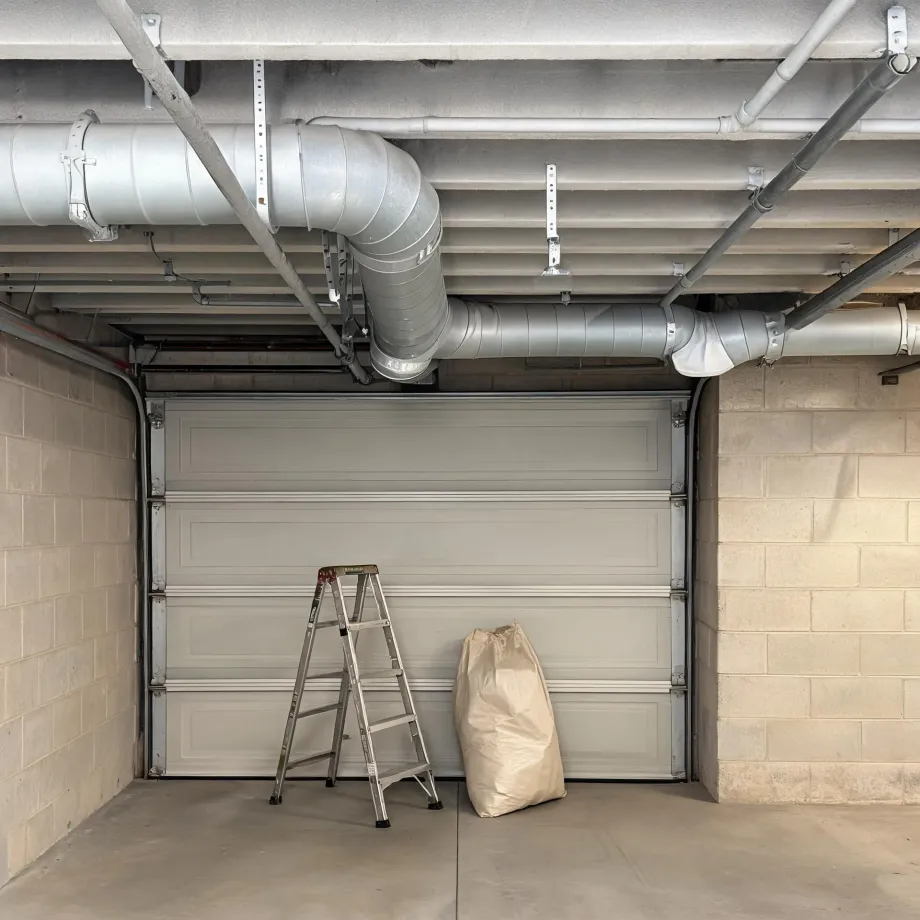
Ductwork sized for an older furnace does not automatically carry a modern one. Half the homes in Dawson County, Georgia were built in 1999 or earlier (2020-2024 ACS 5-year). A contractor installing a new furnace in stock from that period will open the supply and return runs to check whether the existing duct sizing moves enough air for current equipment, and that inspection drives the scope of the job more than the unit itself does. If the runs are undersized or leaking at the joints, the installation expands to address them. The electrical service gets checked the same way, since a new furnace draws what it draws regardless of what was there before.
What a Furnace Installation Covers
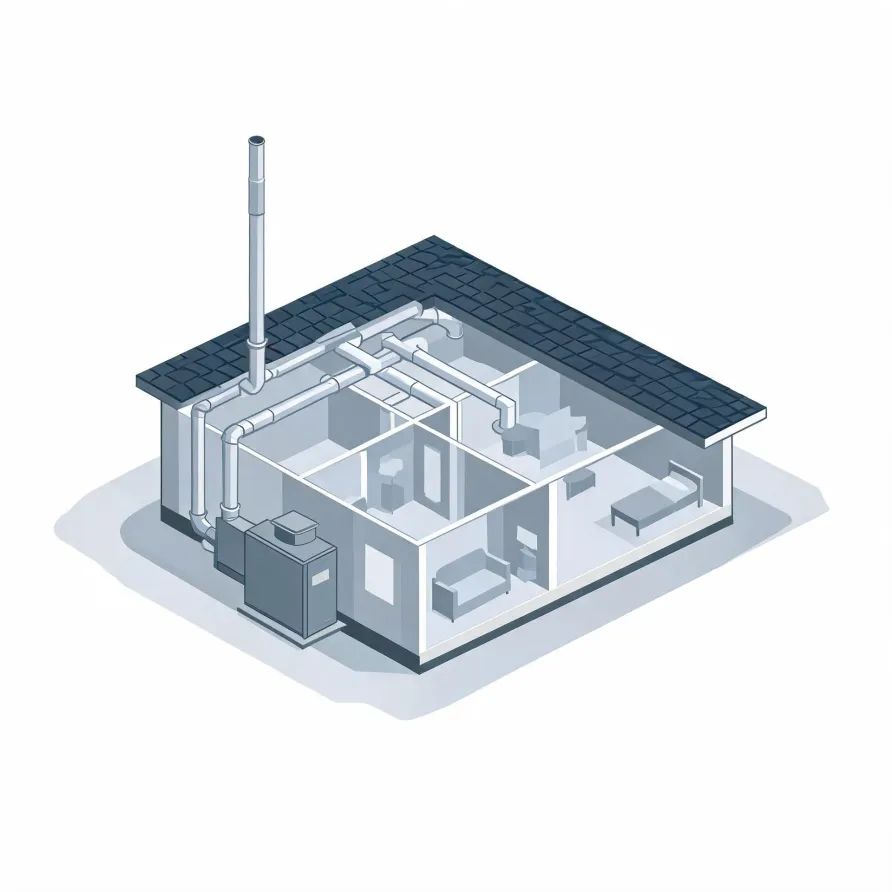
The furnace itself sits inside the house, most often in a basement, utility closet, or mechanical room. It is the central unit that produces heat. A new installation also includes the heat exchanger, the blower, and the flue or venting pipe that carries combustion gases out of the house.
The air handler components connect to the thermostat on the wall, which is the piece the homeowner sets and reads every day. A new installation places the thermostat where it can read the living space accurately. The filter housing and the plenum, which is the box that joins the furnace to the duct openings, are also part of what a contractor puts in place.
The drawing shows a typical layout, and a licensed contractor determines what fits the specifics of this house.
Get matched in Dawson CountyDawson County, by the numbers
58 severe weather events were recorded in Dawson County, Georgia between 2015 and 2024.
NOAA National Centers for Environmental Information, Storm Events Database, bulk CSV export, events 2015-01-01 through 2024-12-31.Half the homes in Dawson County, Georgia were built in 1999 or earlier (2020-2024 ACS 5-year).
U.S. Census Bureau, 2020-2024 American Community Survey 5-Year EstimatesDawson County, Georgia holds 12,992 housing units (2020-2024 ACS 5-year).
U.S. Census Bureau, 2020-2024 American Community Survey 5-Year EstimatesOwners occupy 78.7% of the occupied homes in Dawson County, Georgia (2020-2024 ACS 5-year).
U.S. Census Bureau, 2020-2024 American Community Survey 5-Year EstimatesFurnace Installation Rules for Dawson County, Georgia4 codes, standards, and licensing rules
What the Installation Actually Looks Like
Non-weatherized gas furnaces manufactured on or after November 19, 2015 must reach 80.0 percent AFUE.
Non-weatherized oil-fired furnaces manufactured on or after November 19, 2015 must reach 83.0 percent AFUE.
Mobile home gas furnaces manufactured on or after November 19, 2015 must reach 80.0 percent AFUE.
Non-weatherized gas furnaces manufactured on or after December 18, 2028 must reach 95.0 percent AFUE, up from the 80.0 percent minimum that applies to units manufactured before that date.
Severe Weather Events in Dawson County
Weather in this part of Georgia puts real demand on heating equipment over time. What a furnace endures here shapes what it needs at installation and how long it holds up.
58 severe weather events, 2015–2024. Source: NOAA National Centers for Environmental Information, Storm Events Database.