Tell us about the job
Takes about a minute. No obligation.
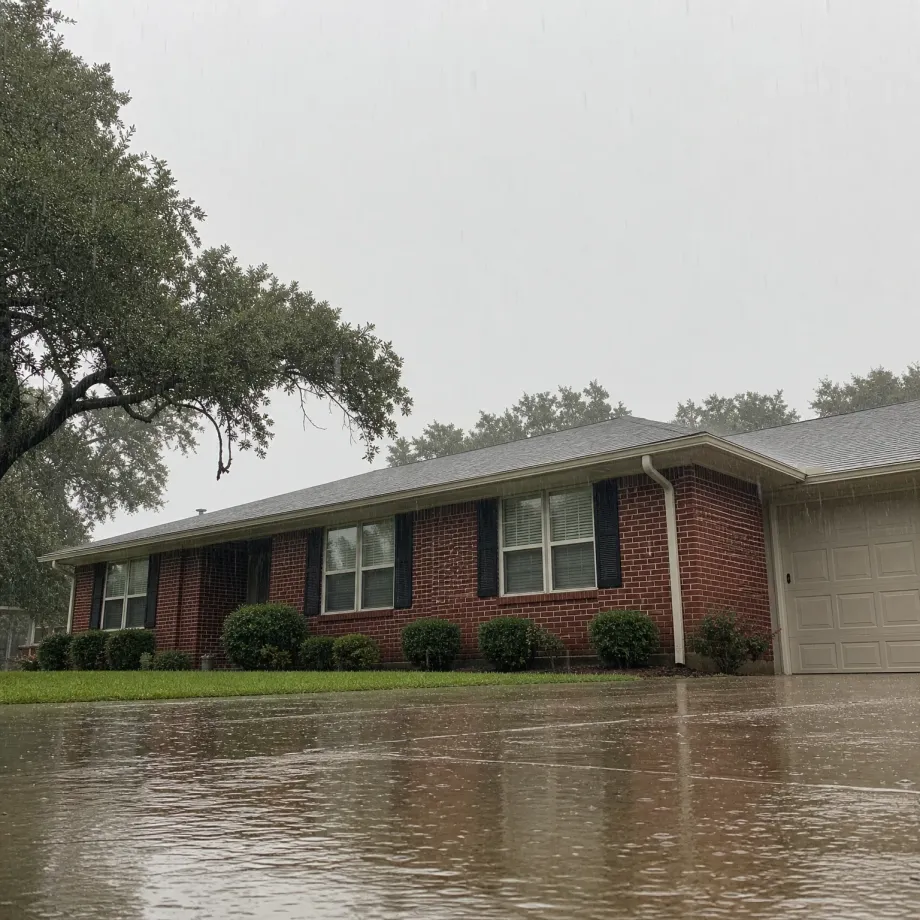
Sizing a furnace in White County starts with the house: its envelope, its duct layout, the gaps where conditioned air escapes. 84 severe weather events were recorded in White County, Georgia between 2015 and 2024. At that rate, severe weather is a real but infrequent condition, not a constant operating pressure on every system in the county. A contractor quoting a new furnace here is not compensating for years of storm-driven wear the way they might in a harder-hit area. The spec comes from heat-loss calculations, the age of the existing equipment, and what the structure actually demands on a cold night.
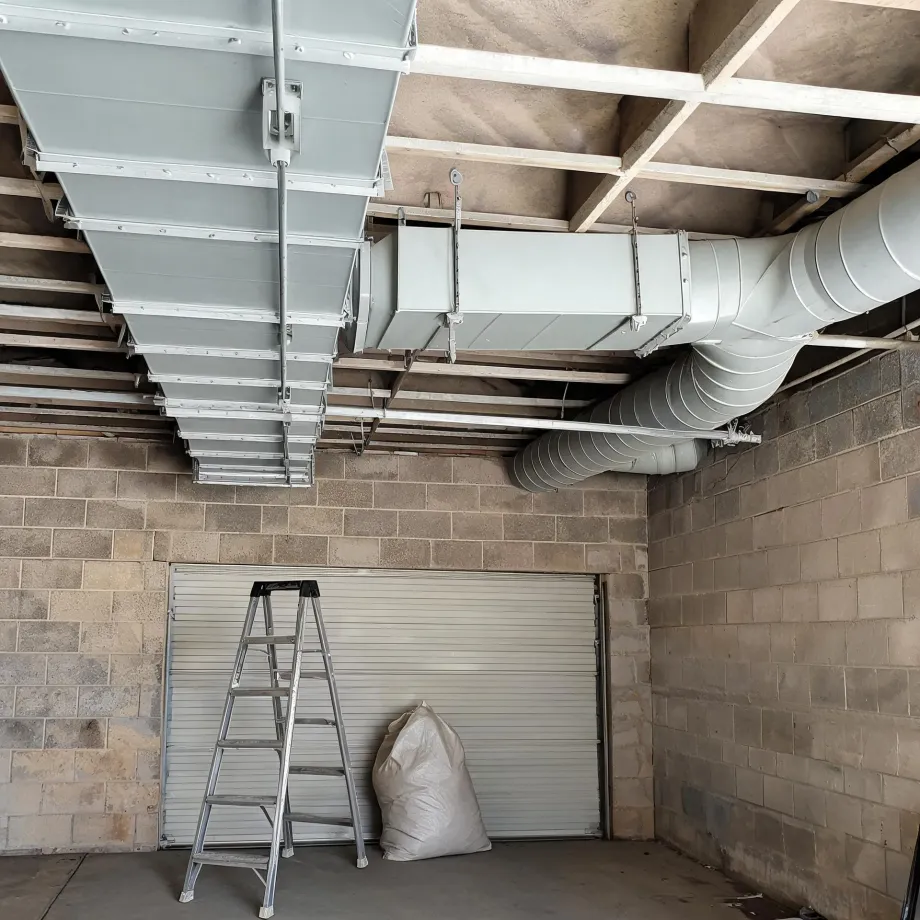
Ductwork sized and routed for older heating equipment does not automatically suit what a modern furnace needs to push through it. Half the homes in White County, Georgia were built in 1994 or earlier (2020-2024 ACS 5-year). That means a contractor pulling a permit here is looking at the existing trunk lines and returns before the new unit gets ordered, because the furnace itself may fit the space where the old one sat while the duct system behind the walls belongs to a different load calculation entirely. An electrical service from that same era is worth checking too, since modern furnaces draw differently at startup than what the original circuits expected.
What a Furnace Installation Puts in Your Home
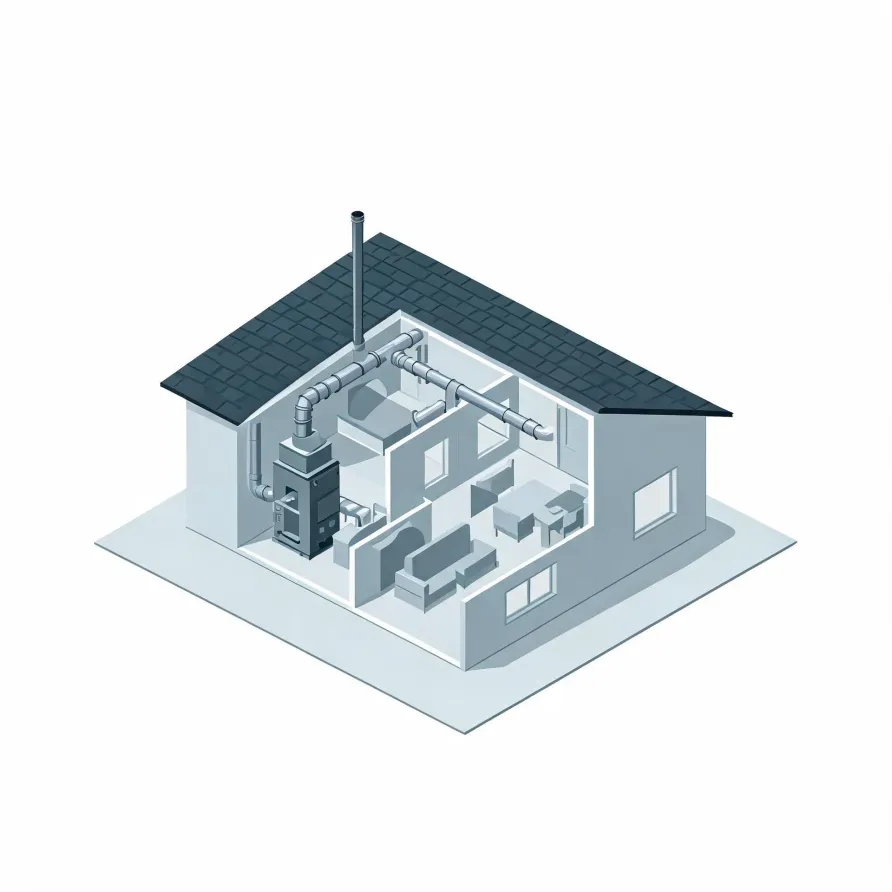
The furnace itself sits inside the house, most often in a basement, utility room, or closet. It is the unit that produces heat by burning fuel or running electrical resistance elements through a heat exchanger, then pushing that warmed air into the duct system. A flue or exhaust vent runs from the unit to the outside to carry combustion gases away.
The thermostat mounts on a wall in the living space and is the point where a homeowner sets and reads the temperature. Near the furnace, a contractor installs the air handler components and the filter housing that sits at the system's return-air opening, keeping particulates out of the heat exchanger and blower assembly.
The drawing shows a typical layout, and a licensed contractor determines exactly what applies to your house.
Get matched in White CountyWhite County, Georgia, by the numbers
84 severe weather events were recorded in White County, Georgia between 2015 and 2024.
NOAA National Centers for Environmental Information, Storm Events Database, bulk CSV export, events 2015-01-01 through 2024-12-31.Half the homes in White County, Georgia were built in 1994 or earlier (2020-2024 ACS 5-year).
U.S. Census Bureau, 2020-2024 American Community Survey 5-Year EstimatesWhite County, Georgia holds 13,952 housing units (2020-2024 ACS 5-year).
U.S. Census Bureau, 2020-2024 American Community Survey 5-Year EstimatesOwners occupy 78.8% of the occupied homes in White County, Georgia (2020-2024 ACS 5-year).
U.S. Census Bureau, 2020-2024 American Community Survey 5-Year EstimatesFurnace Installation Rules for White County, Georgia4 sourced standards and codes
What the installation looks like in White County
Non-weatherized gas furnaces manufactured on or after November 19, 2015 must reach 80.0 percent AFUE.
Non-weatherized oil-fired furnaces manufactured on or after November 19, 2015 must reach 83.0 percent AFUE.
Mobile home gas furnaces manufactured on or after November 19, 2015 must reach 80.0 percent AFUE.
Non-weatherized gas furnaces manufactured on or after December 18, 2028 must reach 95.0 percent AFUE, up from the 80.0 percent minimum that applies to units manufactured before that date.
Severe Weather Events in White County
Local weather puts real demands on heating equipment, and those demands vary by where you live. A furnace sized and installed for White County's conditions holds up differently than one spec'd for somewhere else.
84 severe weather events, 2015–2024. Source: NOAA National Centers for Environmental Information, Storm Events Database.