Tell us about the job
Takes about a minute. No obligation.
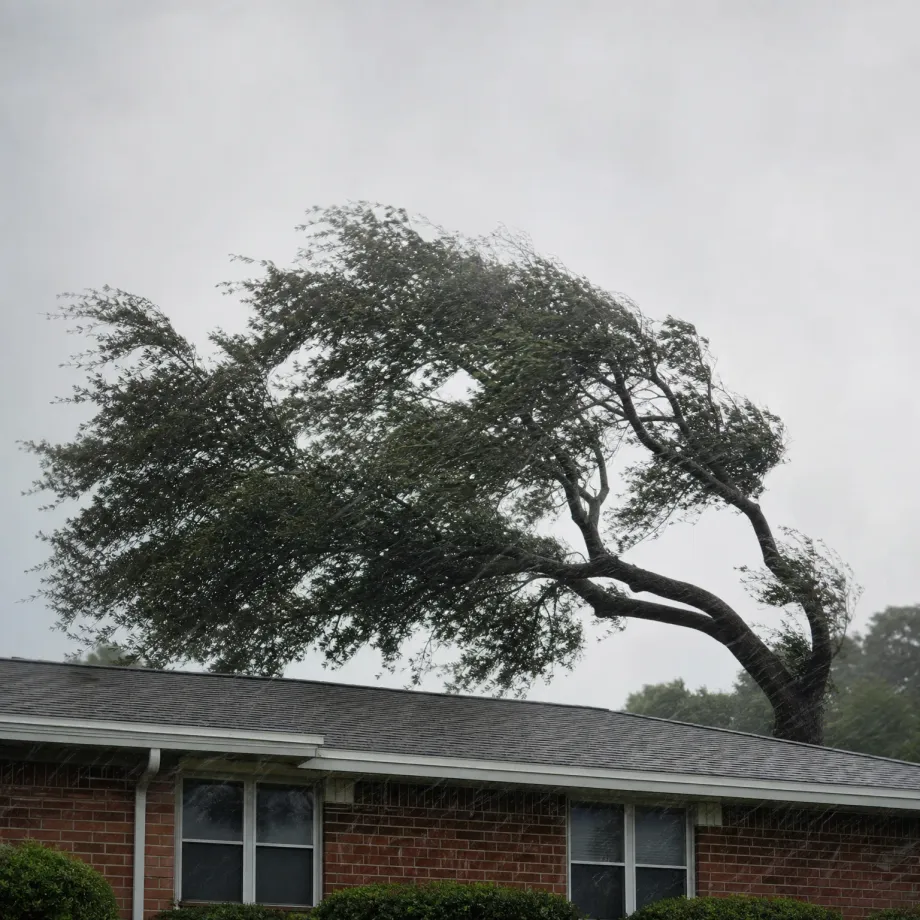
A furnace breaking down in Dade County is rarely a story about what the weather has done to it. 73 severe weather events were recorded in Dade County, Georgia between 2015 and 2024. At that rate, severe weather is an event a system might encounter, not a steady load it fights every season. A contractor looking at a failed heat exchanger or a burned-out igniter here is almost certainly tracing the fault back to age, installation quality, or skipped service intervals. The weather record does not put unusual pressure on that diagnosis.
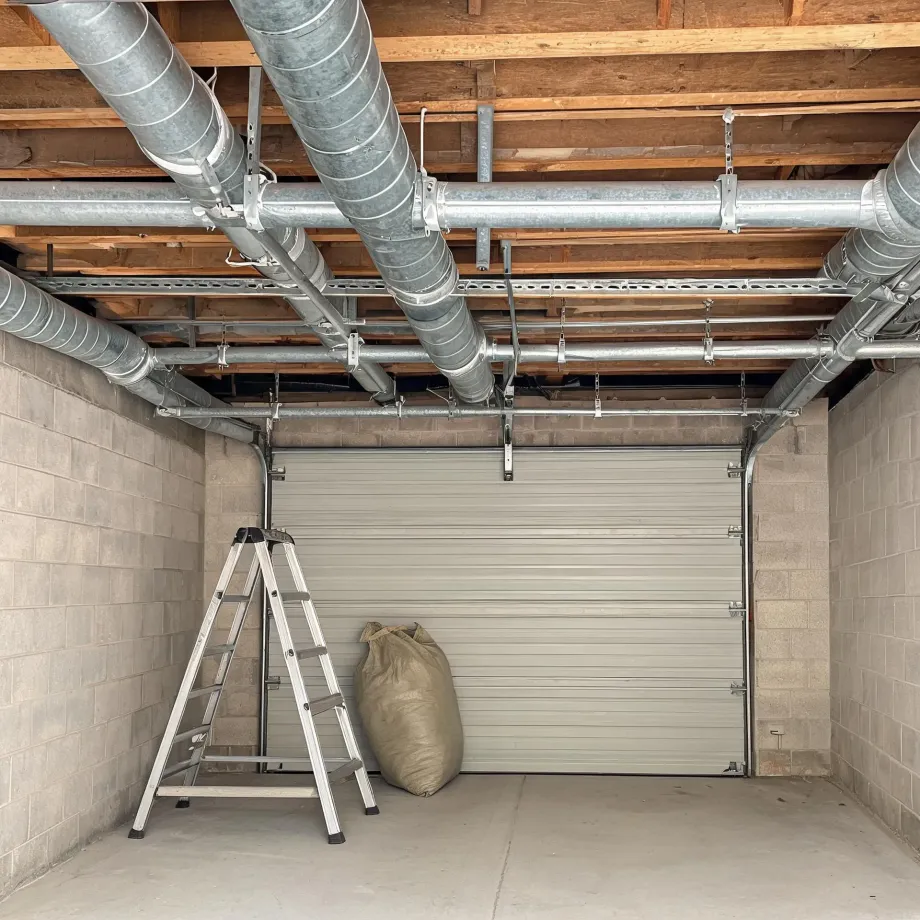
Older ductwork carries its own history, but on a furnace repair call the opened unit is where the job gets decided. Half the homes in Dade County, Georgia were built in 1987 or earlier (2020-2024 ACS 5-year). A heat exchanger that has run through that many seasons can develop hairline cracks that let combustion gases pass into the living space, and a burner assembly coated in scale fires differently than one that is clean. A contractor working through stock like this pulls the panels and looks at the metal itself before pricing anything, because what the surfaces show determines whether a part swap closes the job or whether the exchanger needs to come out.
The Parts of a Furnace a Contractor Checks First
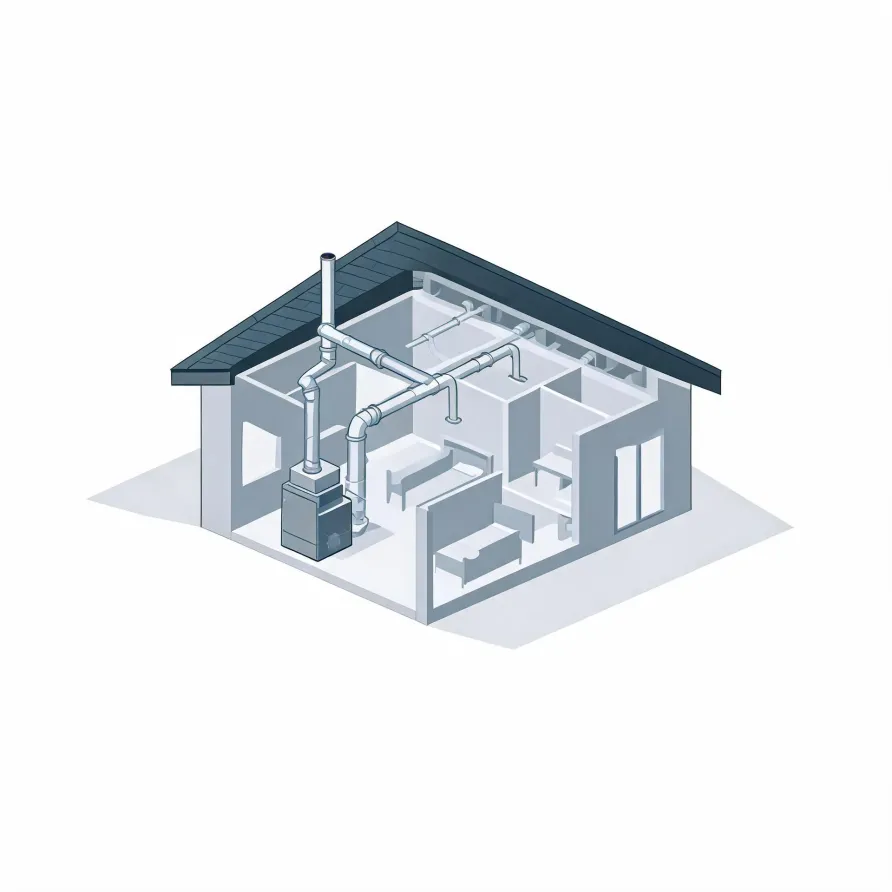
The furnace itself sits in a basement, utility closet, or crawlspace and is the piece a contractor goes to first. Inside it, the heat exchanger is the part most worth attention: a crack there lets combustion gases into the air that circulates through your home. The burners, the igniter, and the flame sensor all live inside that cabinet too, and any one of them can be the reason the system fails to fire.
The blower motor sits at the base of the furnace and pushes conditioned air out through the supply side of the house. The flue pipe runs from the top of the furnace to an exterior wall or roof and carries exhaust gases out. A contractor also checks the control board, which coordinates every other component, and the gas valve, which governs fuel delivery to the burners.
The drawing shows a representative layout, and a licensed contractor determines which components and configurations apply to your specific system.
Get matched in Dade CountyDade County, Georgia, by the numbers
73 severe weather events were recorded in Dade County, Georgia between 2015 and 2024.
NOAA National Centers for Environmental Information, Storm Events Database, bulk CSV export, events 2015-01-01 through 2024-12-31.Half the homes in Dade County, Georgia were built in 1987 or earlier (2020-2024 ACS 5-year).
U.S. Census Bureau, 2020-2024 American Community Survey 5-Year EstimatesDade County, Georgia holds 7,431 housing units (2020-2024 ACS 5-year).
U.S. Census Bureau, 2020-2024 American Community Survey 5-Year EstimatesOwners occupy 80.0% of the occupied homes in Dade County, Georgia (2020-2024 ACS 5-year).
U.S. Census Bureau, 2020-2024 American Community Survey 5-Year EstimatesCodes & Standards Governing Furnace and HVAC Repair in Dade County, Georgia4 sourced rules and standards
What the Repair Visit Looks Like
Non-weatherized gas furnaces manufactured on or after November 19, 2015 must reach 80.0 percent AFUE.
Non-weatherized oil-fired furnaces manufactured on or after November 19, 2015 must reach 83.0 percent AFUE.
Mobile home gas furnaces manufactured on or after November 19, 2015 must reach 80.0 percent AFUE.
Non-weatherized gas furnaces manufactured on or after December 18, 2028 must reach 95.0 percent AFUE, up from the 80.0 percent minimum that applies to units manufactured before that date.
Severe Weather Events in Dade County
Hard weather puts real hours on heating equipment. Furnaces that run through temperature swings, power disruptions, and storm cycles wear differently than ones that don't, and repair needs in Dade County reflect what the local climate actually does.
73 severe weather events, 2015–2024. Source: NOAA National Centers for Environmental Information, Storm Events Database.