Tell us about the job
Takes about a minute. No obligation.
A furnace repair in Greene County starts with the system itself, not the sky above it. 28 severe weather events were recorded in Greene County, Georgia between 2015 and 2024. At that rate, severe weather is something a furnace here has encountered now and then, not something that has ground it down season after season. When a heat exchanger cracks or a blower motor quits, a contractor looks at the age of the equipment, how it was installed, and whether it has been serviced. Those are the variables that decide what failed and what the repair costs.
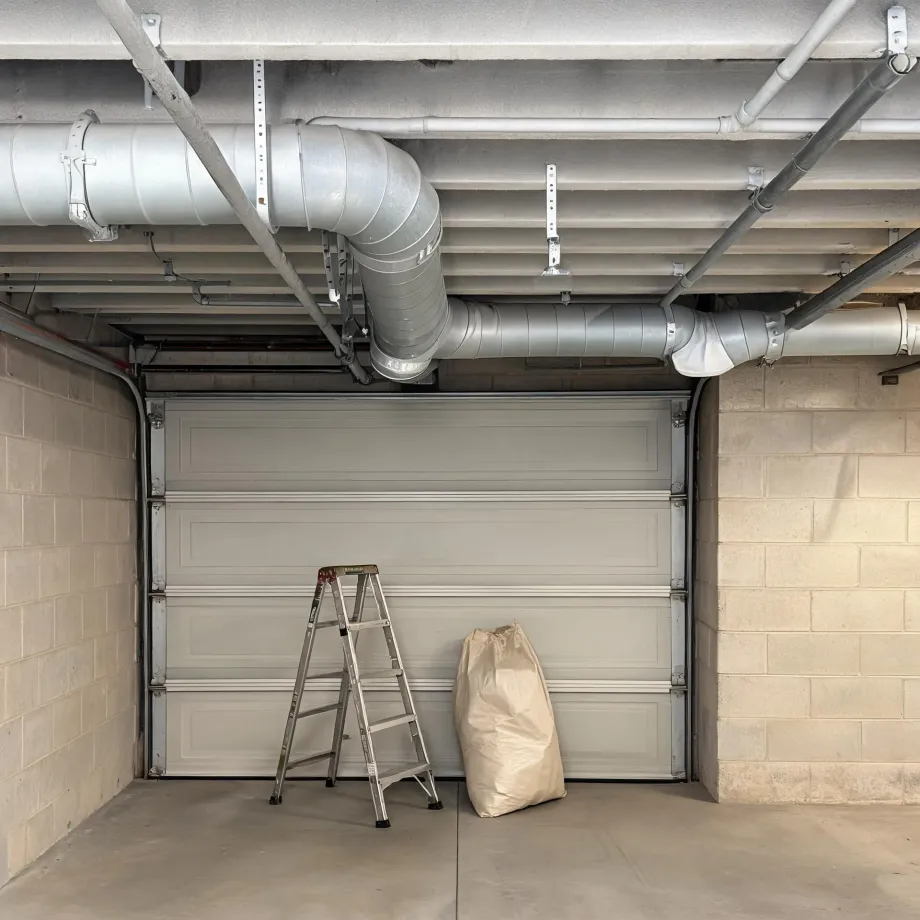
Ductwork that has moved heated air through a house for a long time accumulates more than dust. Gaskets compress, heat exchangers develop stress patterns, and the smaller components a furnace depends on quietly move toward the edge of their rated life. Half the homes in Greene County, Georgia were built in 1997 or earlier (2020-2024 ACS 5-year). A contractor who opens a furnace in Greene County often finds that the repair turns on parts availability, not on the diagnosis itself. The failed component may be straightforward to name and harder to source, which changes both the timeline and what a full repair actually costs the homeowner.
The Parts of a Furnace a Contractor Checks First
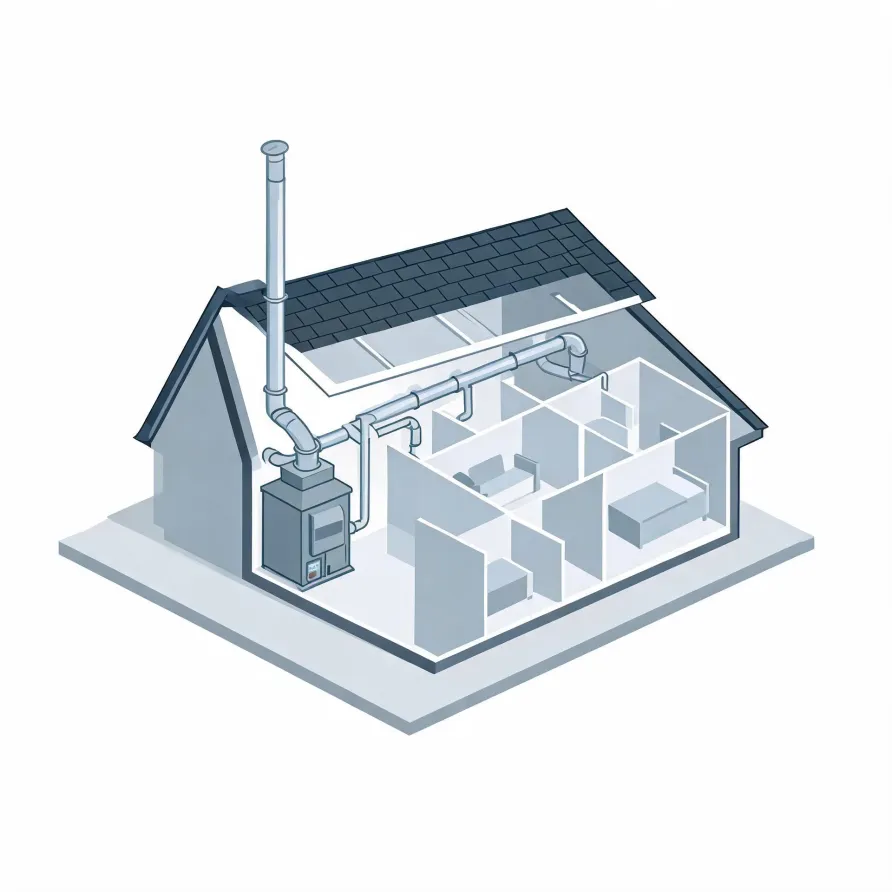
The furnace itself sits in a utility space, basement, or closet and is the piece a contractor goes to first. Inside it, the heat exchanger, burners, and blower motor each have a distinct job, and a fault in any one of them shows up differently. A cracked heat exchanger, a dirty burner, or a failing blower each produces its own set of symptoms.
The flue pipe runs from the furnace up and out of the house, carrying combustion gases away. Alongside the furnace sits the air handler or plenum, and nearby you will find the filter housing and the thermostat wiring connection point. When a contractor works through a repair, these components get checked alongside the furnace itself.
The drawing shows a typical layout, and a licensed contractor determines what applies to your specific system and home.
Get matched in Greene CountyGreene County, Georgia, by the numbers
28 severe weather events were recorded in Greene County, Georgia between 2015 and 2024.
NOAA National Centers for Environmental Information, Storm Events Database, bulk CSV export, events 2015-01-01 through 2024-12-31.Half the homes in Greene County, Georgia were built in 1997 or earlier (2020-2024 ACS 5-year).
U.S. Census Bureau, 2020-2024 American Community Survey 5-Year EstimatesGreene County, Georgia holds 10,830 housing units (2020-2024 ACS 5-year).
U.S. Census Bureau, 2020-2024 American Community Survey 5-Year EstimatesOwners occupy 77.9% of the occupied homes in Greene County, Georgia (2020-2024 ACS 5-year).
U.S. Census Bureau, 2020-2024 American Community Survey 5-Year EstimatesFurnace & HVAC Repair Rules on the Books for Greene County, Georgia4 sourced standards & codes
What the repair visit looks like
Non-weatherized gas furnaces manufactured on or after November 19, 2015 must reach 80.0 percent AFUE.
Non-weatherized oil-fired furnaces manufactured on or after November 19, 2015 must reach 83.0 percent AFUE.
Mobile home gas furnaces manufactured on or after November 19, 2015 must reach 80.0 percent AFUE.
Non-weatherized gas furnaces manufactured on or after December 18, 2028 must reach 95.0 percent AFUE, up from the 80.0 percent minimum that applies to units manufactured before that date.
Weather Stress on HVAC Equipment in Greene County
Heating and cooling systems take a measurable hit every time severe weather moves through an area. Furnace repair needs in Greene County track closely with what the local climate demands from the equipment.
28 severe weather events, 2016–2024. Source: NOAA National Centers for Environmental Information, Storm Events Database.