Tell us about the job
Takes about a minute. No obligation.
A contractor quoting furnace repair in Clay County works out quickly what has actually been stressing the equipment. 44 severe weather events were recorded in Clay County, Georgia between 2015 and 2024. At that rate, severe weather is an occasional event in this area, not a standing condition, so wear patterns that look weather-related usually trace back to installation quality or deferred maintenance instead. Heat exchangers crack from age. Controls fail from neglect. The weather record here is real, but a contractor who leans on it to explain a failed component is reaching past the more likely answer.
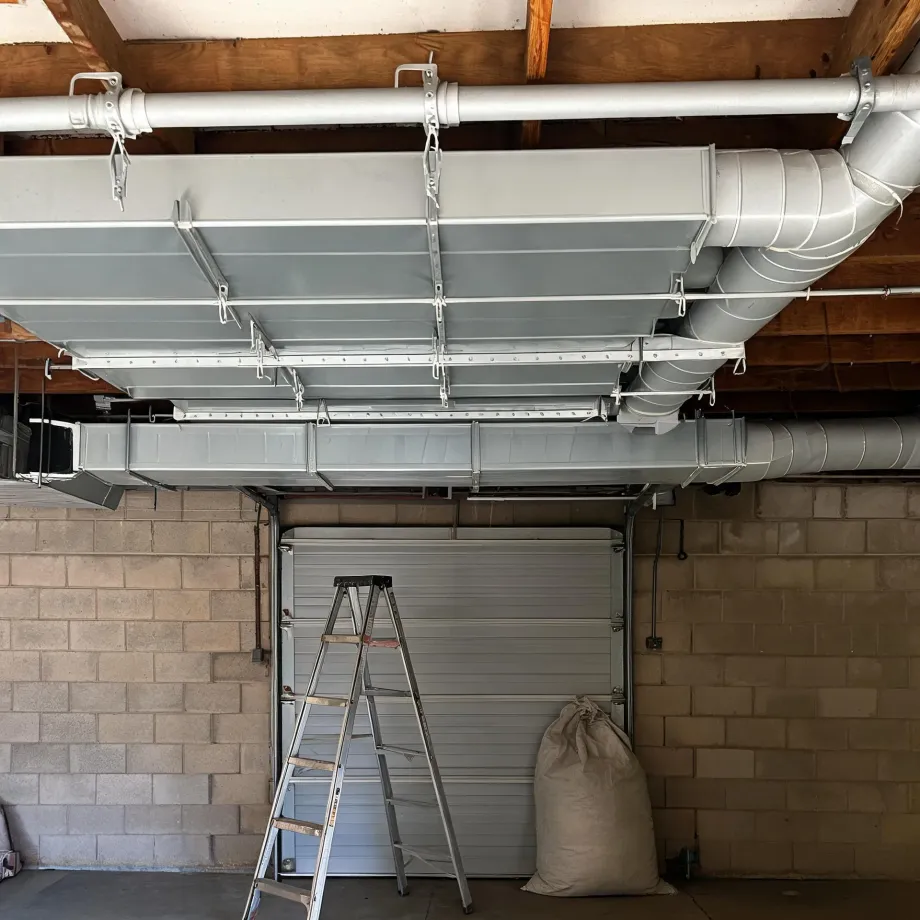
Furnace parts fail in patterns that the age of the housing stock makes predictable. Half the homes in Clay County, Georgia were built in 1988 or earlier (2020-2024 ACS 5-year). A system that has run through that many heating seasons builds up scale on burners, stress fractures in heat exchangers, and deterioration in flue connections that a contractor finds only once the furnace is open. The repair scope follows what is actually inside, and in stock this old that is rarely a simple swap of one component.
The Parts of a Furnace a Contractor Checks First
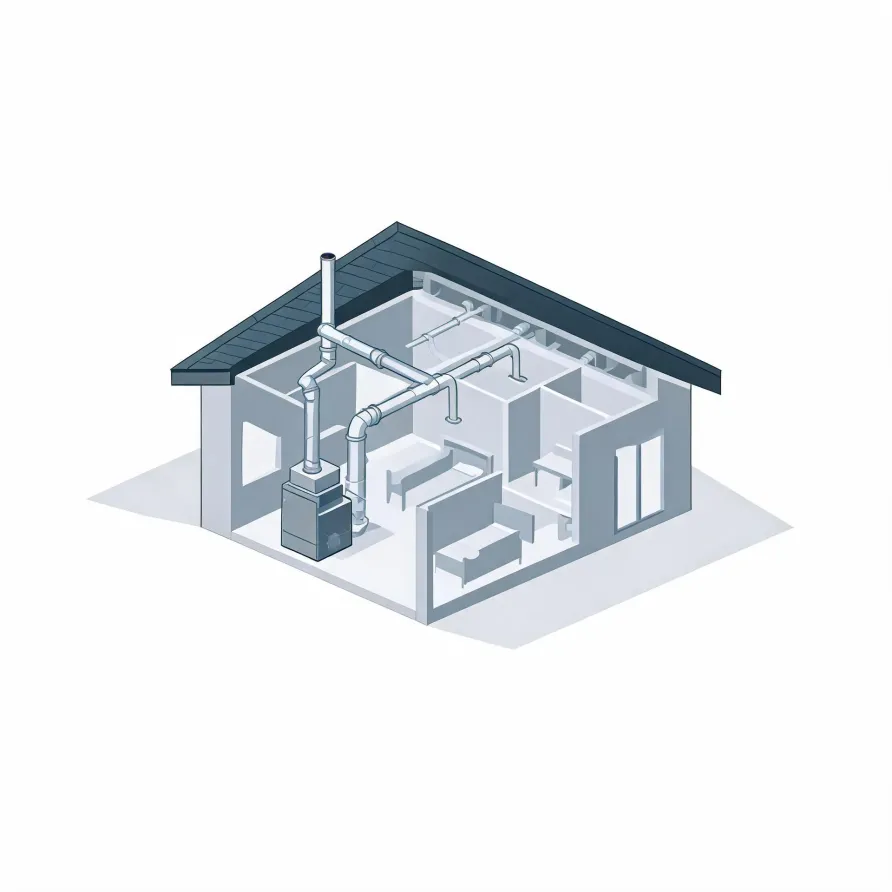
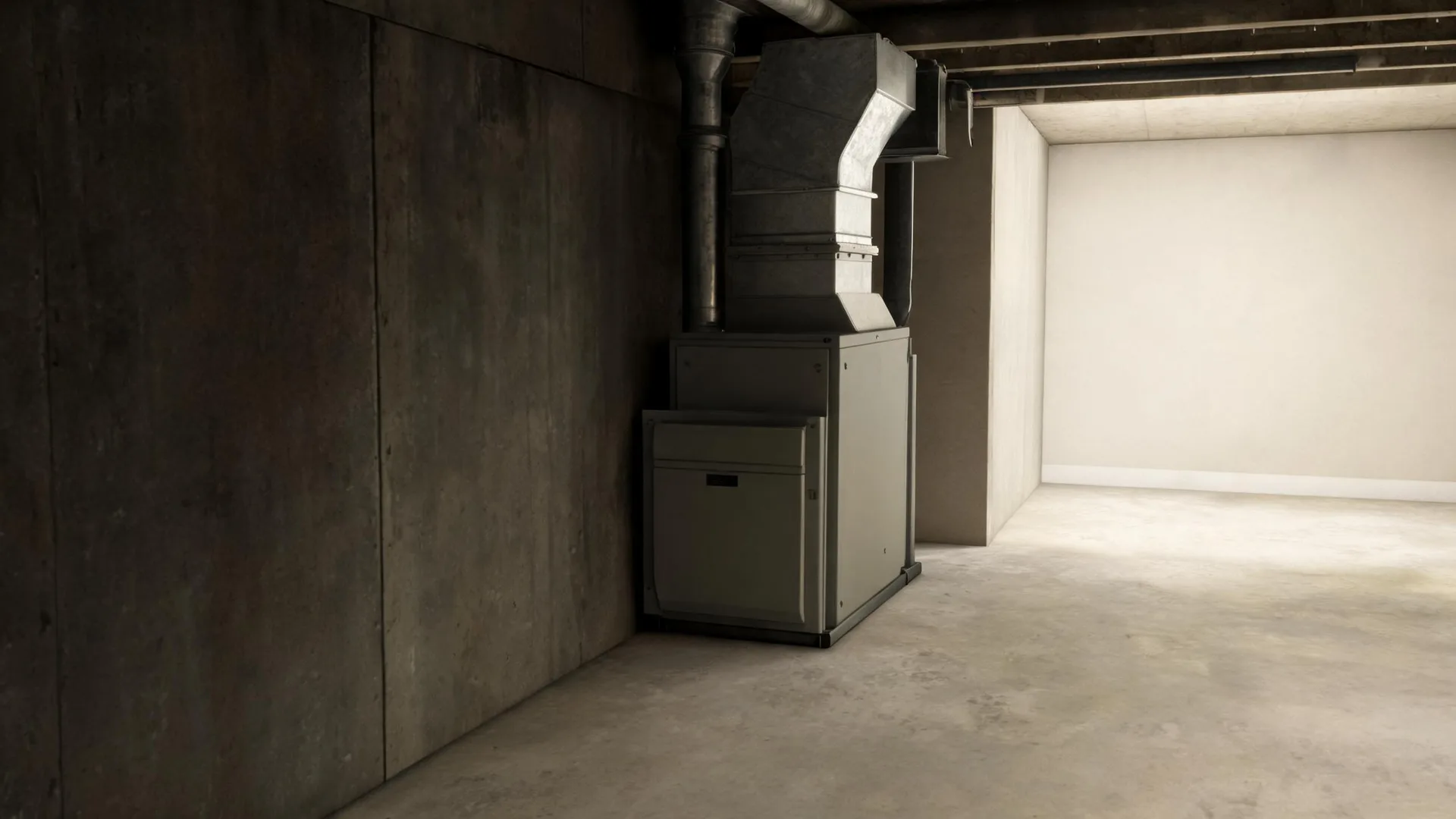
The furnace itself sits in a utility space, basement, or closet and is the piece a contractor goes to first. Inside it, the heat exchanger, burners, and blower motor each have a distinct job, and a failure in any one of them produces a different set of symptoms. Cracks in the heat exchanger, a dirty or failing burner, and a worn blower motor are among the first things a contractor looks at.
The flue pipe runs from the furnace to the outside and carries combustion gases out of the house. Alongside it, the thermostat on the wall and the limit switch inside the cabinet both tell the furnace when to run and when to stop. A fault in either one can make the system behave as though the furnace itself is the problem.
The drawing shows a typical furnace layout, and a licensed contractor determines what applies to your specific equipment and installation.
Get matched in Clay CountyClay County, Georgia, by the numbers
44 severe weather events were recorded in Clay County, Georgia between 2015 and 2024.
NOAA National Centers for Environmental Information, Storm Events Database, bulk CSV export, events 2015-01-01 through 2024-12-31.Half the homes in Clay County, Georgia were built in 1988 or earlier (2020-2024 ACS 5-year).
U.S. Census Bureau, 2020-2024 American Community Survey 5-Year EstimatesClay County, Georgia holds 1,981 housing units (2020-2024 ACS 5-year).
U.S. Census Bureau, 2020-2024 American Community Survey 5-Year EstimatesOwners occupy 78.3% of the occupied homes in Clay County, Georgia (2020-2024 ACS 5-year).
U.S. Census Bureau, 2020-2024 American Community Survey 5-Year EstimatesCodes & Standards Governing Furnace and HVAC Repair in Clay County, Georgia4 sourced rules and standards
What the repair visit looks like
Non-weatherized gas furnaces manufactured on or after November 19, 2015 must reach 80.0 percent AFUE.
Non-weatherized oil-fired furnaces manufactured on or after November 19, 2015 must reach 83.0 percent AFUE.
Mobile home gas furnaces manufactured on or after November 19, 2015 must reach 80.0 percent AFUE.
Non-weatherized gas furnaces manufactured on or after December 18, 2028 must reach 95.0 percent AFUE, up from the 80.0 percent minimum that applies to units manufactured before that date.
Severe Weather Events in Clay County
Extreme weather puts real strain on furnace components, and how hard equipment has to work depends on what the local climate actually does. That pattern is a county-level fact, which is why repair needs in Clay County are not the same as repair needs somewhere else.
44 severe weather events, 2015–2024. Source: NOAA National Centers for Environmental Information, Storm Events Database.