Tell us about the job
Takes about a minute. No obligation.
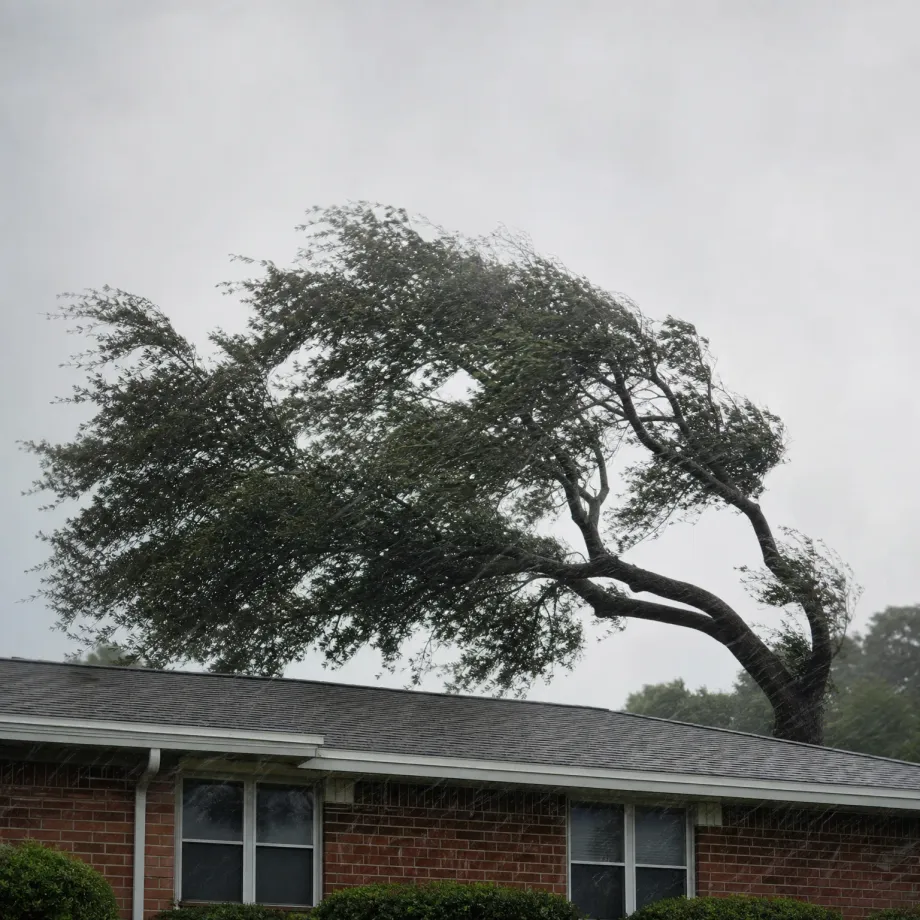
A contractor quoting furnace repair in Bacon County starts by asking how old the equipment is and how it has been maintained, and those two questions do most of the explaining before anything else is checked. 36 severe weather events were recorded in Bacon County, Georgia between 2015 and 2024. At that rate, severe weather is an occasional fact of life here, not a grinding load that wears components down ahead of schedule. A heat exchanger cracked by age looks different from one stressed by repeated hard demand, and in this county the former is what a contractor expects to find. Filters, burners, and ignition systems fail on their own timetable, and the weather record here does not change that timetable much.
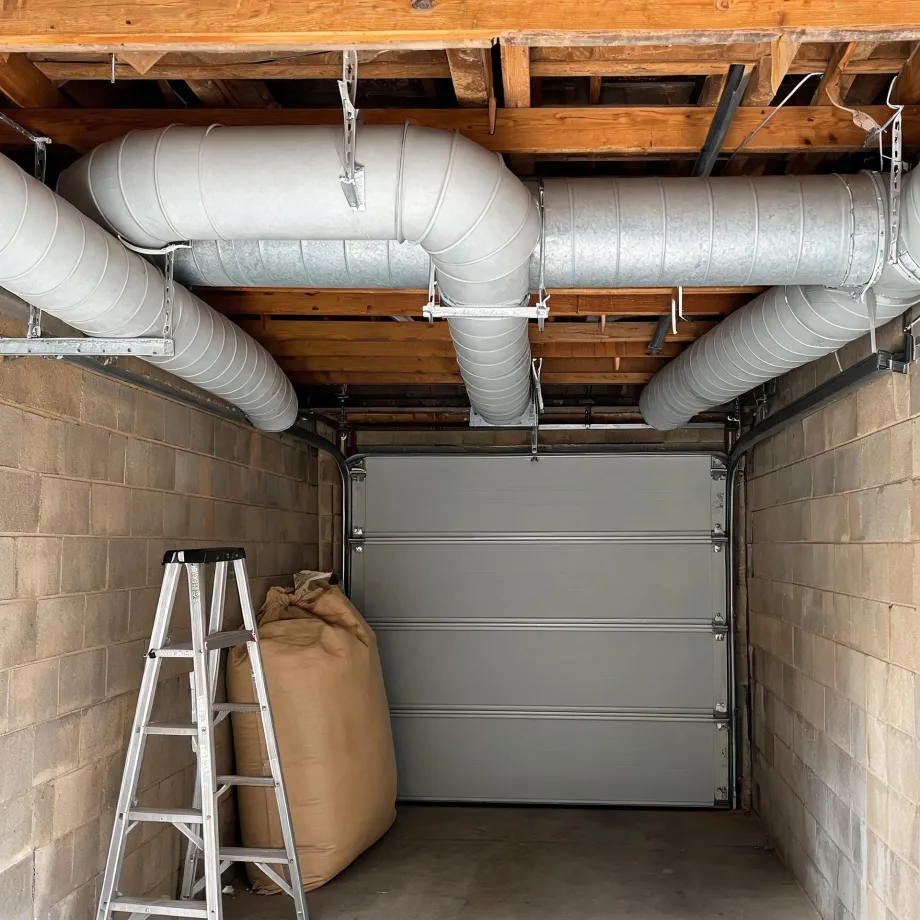
Ductwork in a house this old has usually been cut into, rerouted, and sealed more than once, and a furnace repair can surface that history fast. Half the homes in Bacon County, Georgia were built in 1979 or earlier (2020-2024 ACS 5-year). A contractor opening a furnace in stock like this finds the unit, but also finds out how the duct runs connected to it have held up over that span of adaptation. If a heat exchanger has cracked or a blower motor has failed, the repair itself may be straightforward. What takes longer to work out is whether the ductwork feeding and returning from the furnace is still doing what the system needs it to do.
The Parts of a Furnace a Contractor Checks First
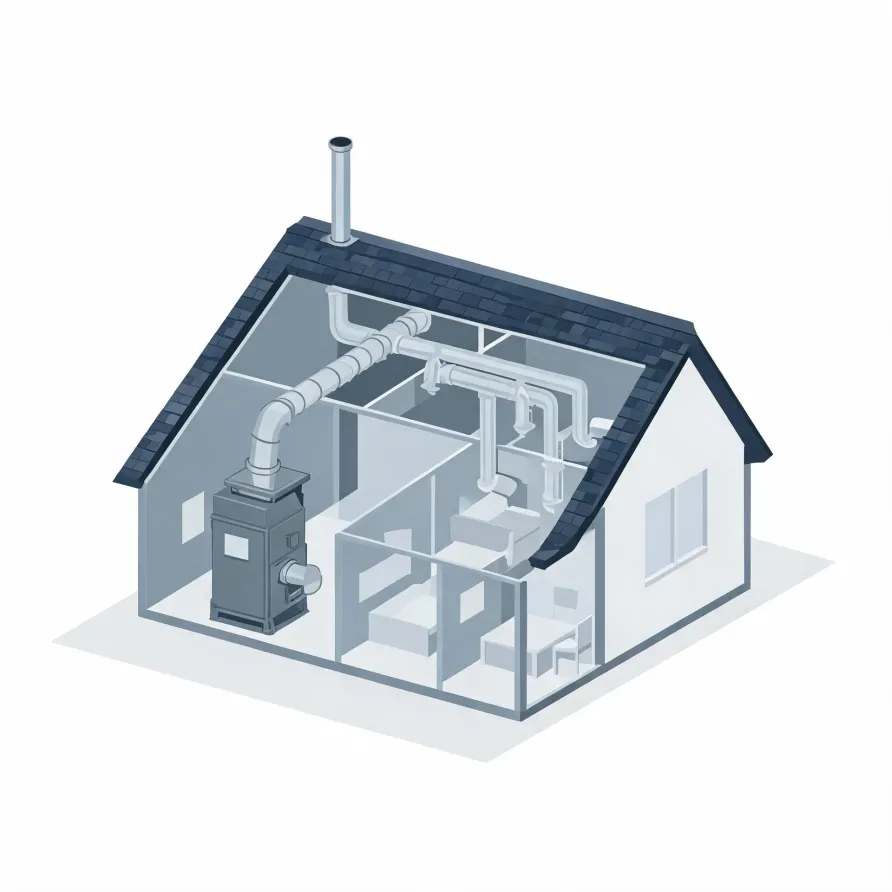
The furnace itself sits in a mechanical room, basement, or utility closet and is the piece a contractor goes to first. Inside it, the heat exchanger is the part most worth understanding: when it cracks or corrodes, combustion gases can move into the living space, and that failure tends to show up as uneven heat or a unit that shuts off before the house is warm. The burner assembly and igniter sit just below it, and either one can be the reason a furnace runs briefly and then stops.
The blower motor lives in the lower cabinet and pushes conditioned air out through the supply side of the duct system. The flue pipe runs from the top of the unit to an exterior wall or roof and carries exhaust out of the house. A contractor also checks the control board, which sits inside the cabinet and governs the sequence every other component depends on.
The drawing shows a general layout of these components, and a licensed contractor determines what applies to the specific equipment and configuration in your home.
Get matched in Bacon CountyBacon County by the Numbers
36 severe weather events were recorded in Bacon County, Georgia between 2015 and 2024.
NOAA National Centers for Environmental Information, Storm Events Database, bulk CSV export, events 2015-01-01 through 2024-12-31.Half the homes in Bacon County, Georgia were built in 1979 or earlier (2020-2024 ACS 5-year).
U.S. Census Bureau, 2020-2024 American Community Survey 5-Year EstimatesBacon County, Georgia holds 4,831 housing units (2020-2024 ACS 5-year).
U.S. Census Bureau, 2020-2024 American Community Survey 5-Year EstimatesOwners occupy 68.6% of the occupied homes in Bacon County, Georgia (2020-2024 ACS 5-year).
U.S. Census Bureau, 2020-2024 American Community Survey 5-Year EstimatesCodes & Standards Behind Furnace Repair in Bacon County, Georgia4 sourced rules & standards
What the repair visit looks like
Non-weatherized gas furnaces manufactured on or after November 19, 2015 must reach 80.0 percent AFUE.
Non-weatherized oil-fired furnaces manufactured on or after November 19, 2015 must reach 83.0 percent AFUE.
Mobile home gas furnaces manufactured on or after November 19, 2015 must reach 80.0 percent AFUE.
Non-weatherized gas furnaces manufactured on or after December 18, 2028 must reach 95.0 percent AFUE, up from the 80.0 percent minimum that applies to units manufactured before that date.
Weather Load on Furnace Systems in Bacon County
Stress on heating equipment in Bacon County comes partly from what the weather demands of it year after year. A furnace that runs hard through rough stretches ages differently than one that does not, and that gap shows up in repair frequency, part wear, and how much a local contractor sees on the job.
36 severe weather events, 2015–2024. Source: NOAA National Centers for Environmental Information, Storm Events Database.