Tell us about the job
Takes about a minute. No obligation.
A contractor quoting a furnace installation in Thomas County has to account for what the climate here actually demands, not what a catalog spec assumes. 129 severe weather events were recorded in Thomas County, Georgia between 2015 and 2024. At that rate, severe weather is a routine condition, and a furnace installed without accounting for it, whether in sizing, ductwork sealing, or equipment grade, will carry that load with less margin than it needs. What a contractor chooses at the time of install determines how much slack the system has when the weather pushes it.
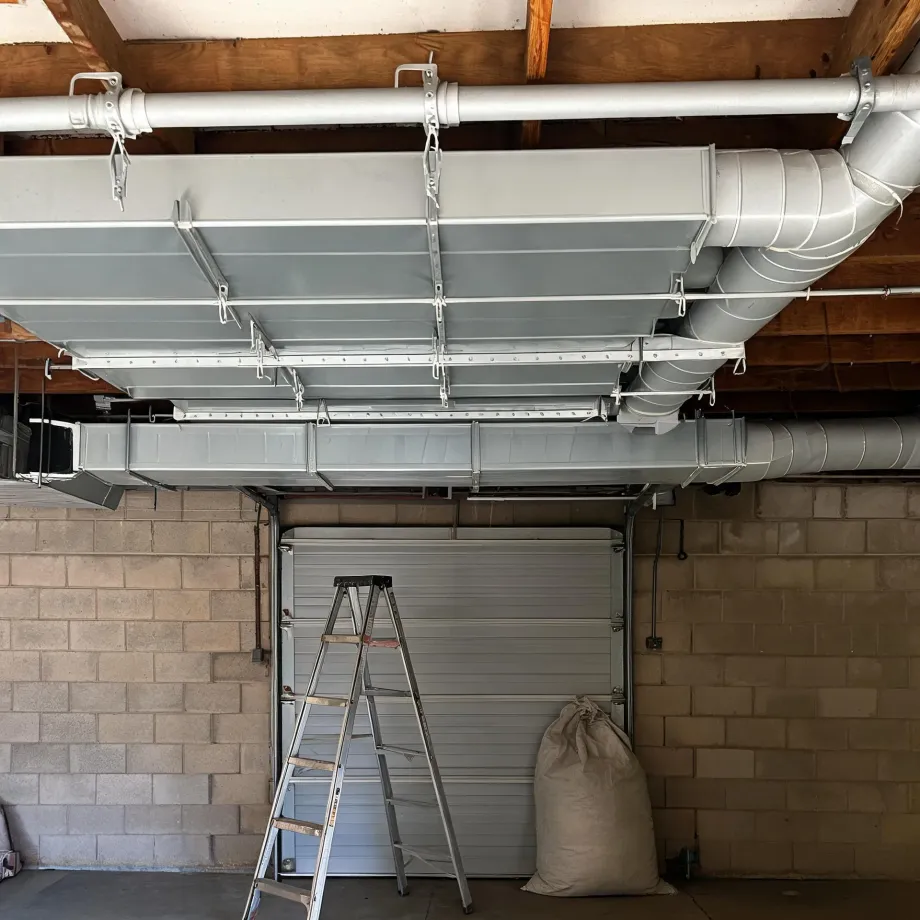
Ductwork designed for equipment that has since been discontinued is what a contractor finds behind the walls of a significant share of Thomas County homes. Half the homes in Thomas County, Georgia were built in 1987 or earlier (2020-2024 ACS 5-year). What that means for a furnace installation is concrete: the new unit has to move through whatever was laid out for an older system, and where the existing runs are undersized or badly routed, the duct work drives the job scope more than the furnace does. A contractor quoting a replacement here measures and checks the distribution system before settling on equipment.
What a Furnace Installation Covers
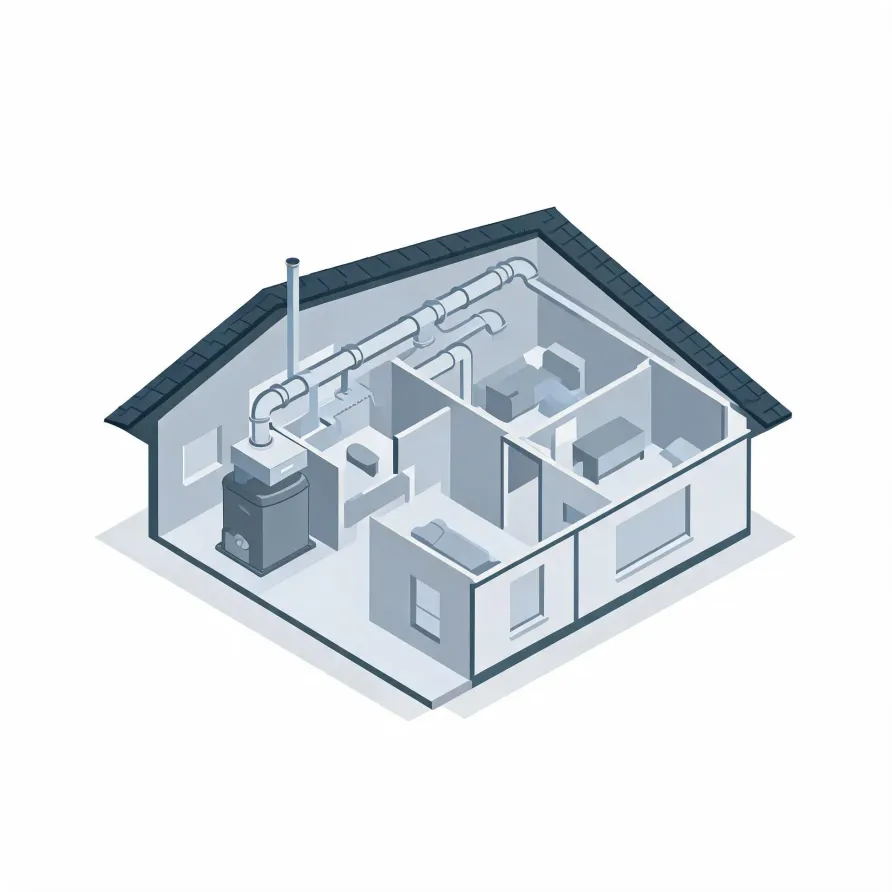
The furnace itself sits inside the house, most often in a basement, utility closet, or mechanical room. It is the box that produces the heat. Alongside it, the air handler moves conditioned air into the duct system that feeds the rest of the house.
The flue pipe runs from the furnace to an exterior wall or through the roof, carrying combustion gases out of the home. The thermostat mounts on an interior wall and is the point where the homeowner sets and reads the system. Both are part of what a contractor accounts for during a new installation.
The drawing shows a general layout of these components, and a licensed contractor determines exactly how each one applies to your house.
Get matched in Thomas CountyThomas County, Georgia, by the numbers
129 severe weather events were recorded in Thomas County, Georgia between 2015 and 2024.
NOAA National Centers for Environmental Information, Storm Events Database, bulk CSV export, events 2015-01-01 through 2024-12-31.Half the homes in Thomas County, Georgia were built in 1987 or earlier (2020-2024 ACS 5-year).
U.S. Census Bureau, 2020-2024 American Community Survey 5-Year EstimatesThomas County, Georgia holds 21,130 housing units (2020-2024 ACS 5-year).
U.S. Census Bureau, 2020-2024 American Community Survey 5-Year EstimatesOwners occupy 63.8% of the occupied homes in Thomas County, Georgia (2020-2024 ACS 5-year).
U.S. Census Bureau, 2020-2024 American Community Survey 5-Year EstimatesFurnace & HVAC Installation Rules for Thomas County, Georgia4 sourced codes & standards
What the installation looks like from your side
Non-weatherized gas furnaces manufactured on or after November 19, 2015 must reach 80.0 percent AFUE.
Non-weatherized oil-fired furnaces manufactured on or after November 19, 2015 must reach 83.0 percent AFUE.
Mobile home gas furnaces manufactured on or after November 19, 2015 must reach 80.0 percent AFUE.
Non-weatherized gas furnaces manufactured on or after December 18, 2028 must reach 95.0 percent AFUE, up from the 80.0 percent minimum that applies to units manufactured before that date.
Severe Weather Events in Thomas County
Weather puts real demands on heating equipment over time. A furnace sized and installed for local conditions handles those demands better than one spec'd to a national average, which is why the weather record here is relevant to any installation decision in Thomas County.
129 severe weather events, 2015–2024. Source: NOAA National Centers for Environmental Information, Storm Events Database.