Tell us about the job
Takes about a minute. No obligation.
Sizing a furnace for a Glascock County home is a local question with local answers, and the weather record here shapes what that means in practice. 8 severe weather events were recorded in Glascock County, Georgia between 2015 and 2024. At that rate, severe weather is an event a system may see, not a condition it runs against every season. A contractor quoting an installation here cannot lean on climate load to justify oversizing or heavy-duty spec choices. What drives the right decision is the house itself: its envelope, its duct layout, and the quality of the install. A furnace that fits the structure and is put in correctly will perform; one that is oversized to hedge against a weather story the county does not tell will short-cycle and wear faster.
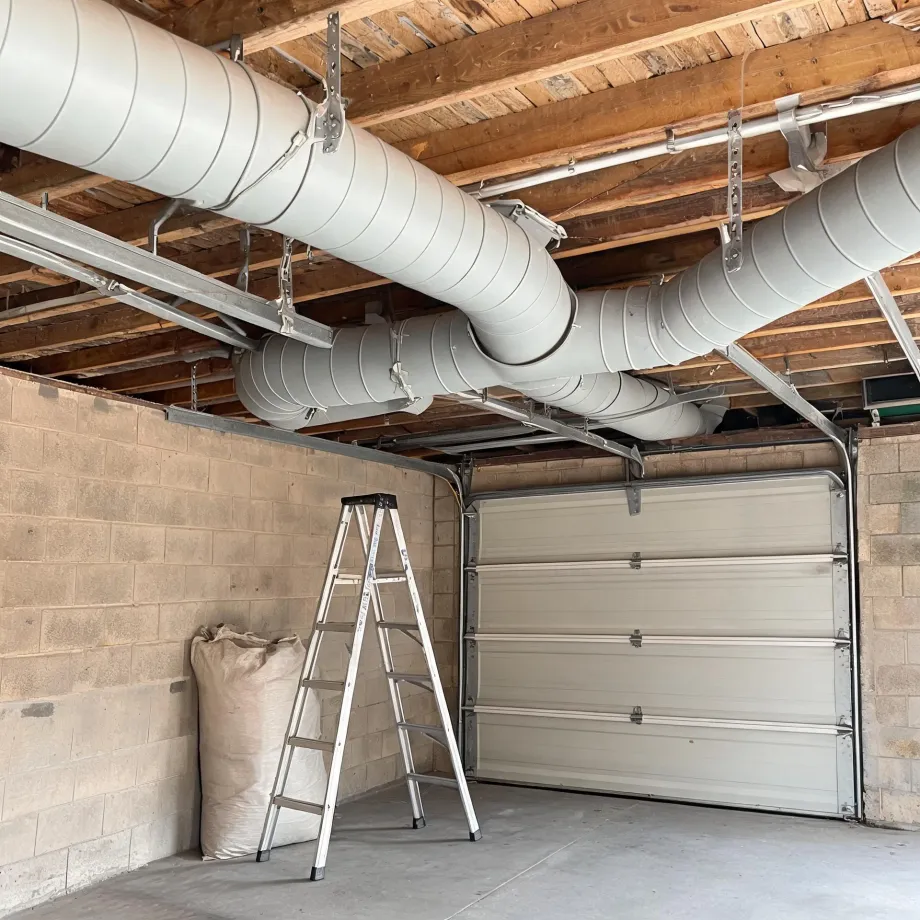
Ductwork laid down for older equipment carries assumptions about airflow, trunk sizing, and return placement that a modern furnace may not share. Half the homes in Glascock County, Georgia were built in 1985 or earlier (2020-2024 ACS 5-year). A contractor pricing a furnace installation here has to assess whether what is already in the walls and ceiling can move the air a new unit will push, or whether the duct system becomes part of the job. The electrical side follows the same logic: what the house was wired for and what a current unit draws are two different numbers, and a quote that skips that check is incomplete.
What a Furnace Installation Puts in Your Home
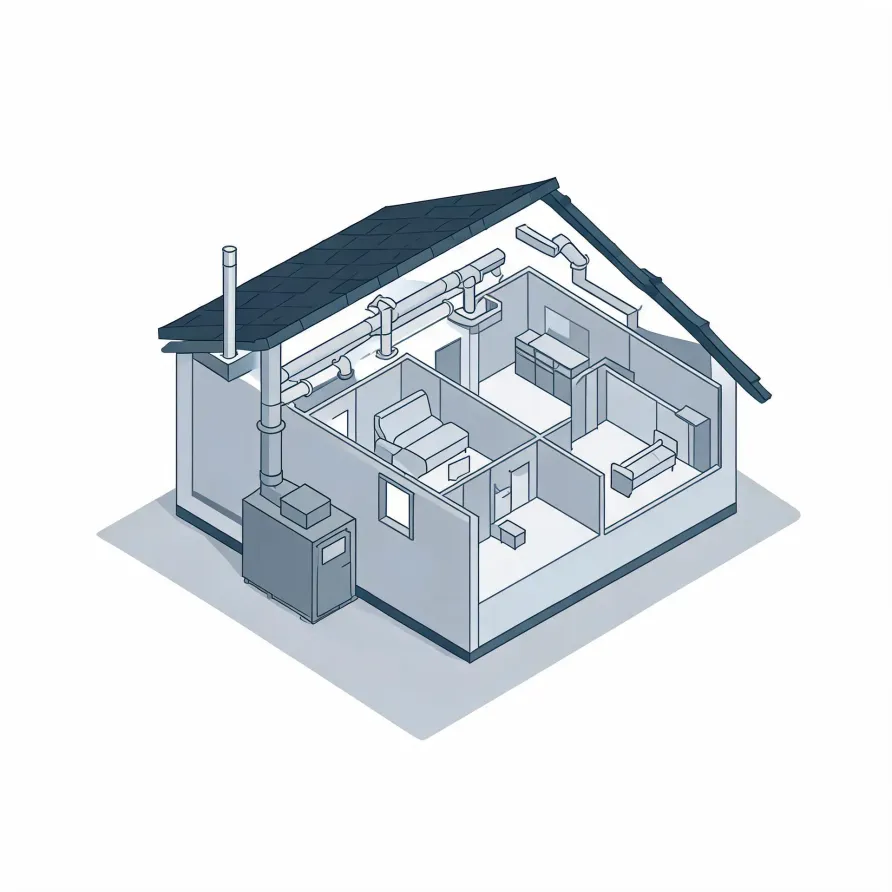
The furnace itself sits inside the house, most often in a basement, utility closet, or dedicated mechanical room. It holds the heat exchanger, the burner assembly, and the blower in a single cabinet. That cabinet is what a contractor brings in, positions, and connects to the rest of the system.
The flue pipe runs from the furnace to an exterior wall or through the roof, carrying combustion gases out of the house. The thermostat mounts on an interior wall and serves as the control point for the whole system. A condensate drain line also runs from the unit when the furnace model produces moisture during operation.
The drawing beside this text shows how these pieces relate in a typical layout, and a licensed contractor determines exactly what applies to your house.
Get matched in Glascock CountyGlascock County, by the numbers
8 severe weather events were recorded in Glascock County, Georgia between 2015 and 2024.
NOAA National Centers for Environmental Information, Storm Events Database, bulk CSV export, events 2015-01-01 through 2024-12-31.Half the homes in Glascock County, Georgia were built in 1985 or earlier (2020-2024 ACS 5-year).
U.S. Census Bureau, 2020-2024 American Community Survey 5-Year EstimatesGlascock County, Georgia holds 1,410 housing units (2020-2024 ACS 5-year).
U.S. Census Bureau, 2020-2024 American Community Survey 5-Year EstimatesOwners occupy 67.6% of the occupied homes in Glascock County, Georgia (2020-2024 ACS 5-year).
U.S. Census Bureau, 2020-2024 American Community Survey 5-Year EstimatesCodes & Standards Governing Furnace Installation in Glascock County, Georgia4 sourced rules and standards
What the installation actually looks like
Non-weatherized gas furnaces manufactured on or after November 19, 2015 must reach 80.0 percent AFUE.
Non-weatherized oil-fired furnaces manufactured on or after November 19, 2015 must reach 83.0 percent AFUE.
Mobile home gas furnaces manufactured on or after November 19, 2015 must reach 80.0 percent AFUE.
Non-weatherized gas furnaces manufactured on or after December 18, 2028 must reach 95.0 percent AFUE, up from the 80.0 percent minimum that applies to units manufactured before that date.