Tell us about the job
Takes about a minute. No obligation.
A furnace installation in Clayton County has to be sized for what this area actually does to equipment, not for what a catalog suggests as a default. 51 severe weather events were recorded in Clayton County, Georgia between 2015 and 2024. At that rate, severe weather is a regular feature of operating here, and a furnace that is undersized or poorly matched to the home's envelope will strain against demand it was never built to meet. A contractor doing this work has to run a full load calculation before specifying equipment, accounting for the house, its insulation, and the conditions the system will face. Cutting that step produces a unit that short-cycles, overworks its heat exchanger, and fails early.
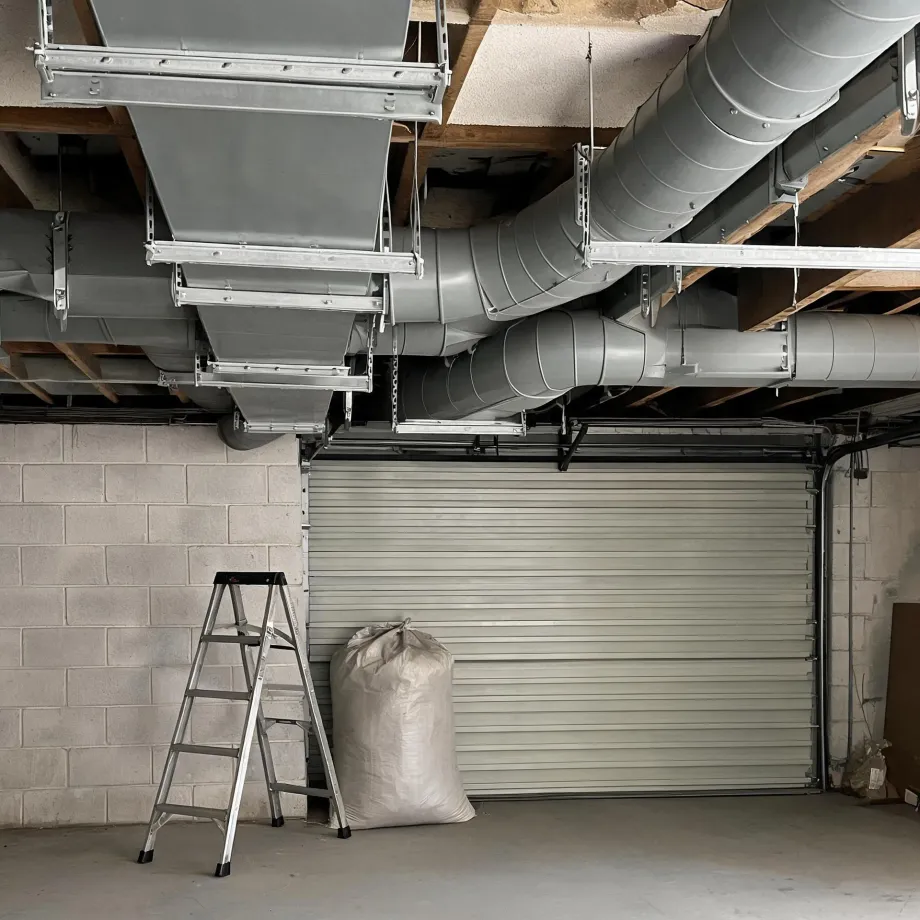
Ductwork laid in for older furnace generations runs in different pressure ranges, and what a contractor finds when they open the system up often does not match what a new unit needs to push air through the house correctly. Half the homes in Clayton County, Georgia were built in 1989 or earlier (2020-2024 ACS 5-year). A furnace swap that looks straightforward on paper can turn into a duct-modification job once a contractor checks static pressure and measures what the existing runs will actually carry. The electrical side gets checked too, since panel capacity for a new unit has to be confirmed against what the house was originally wired for.
What a Furnace Installation Covers
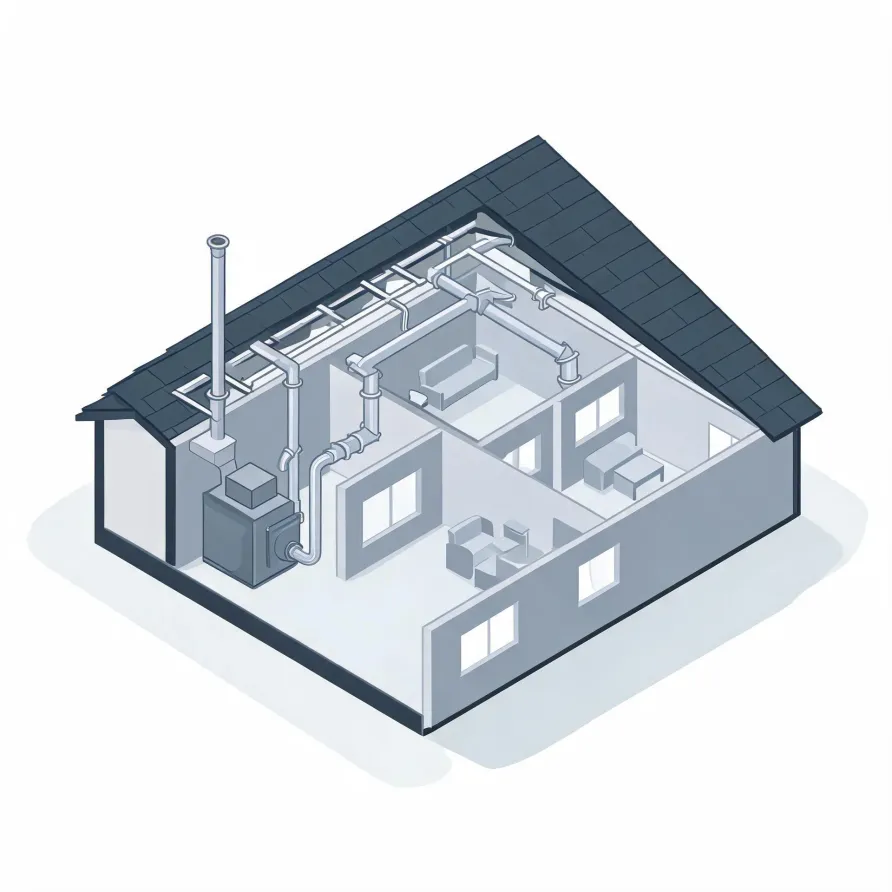
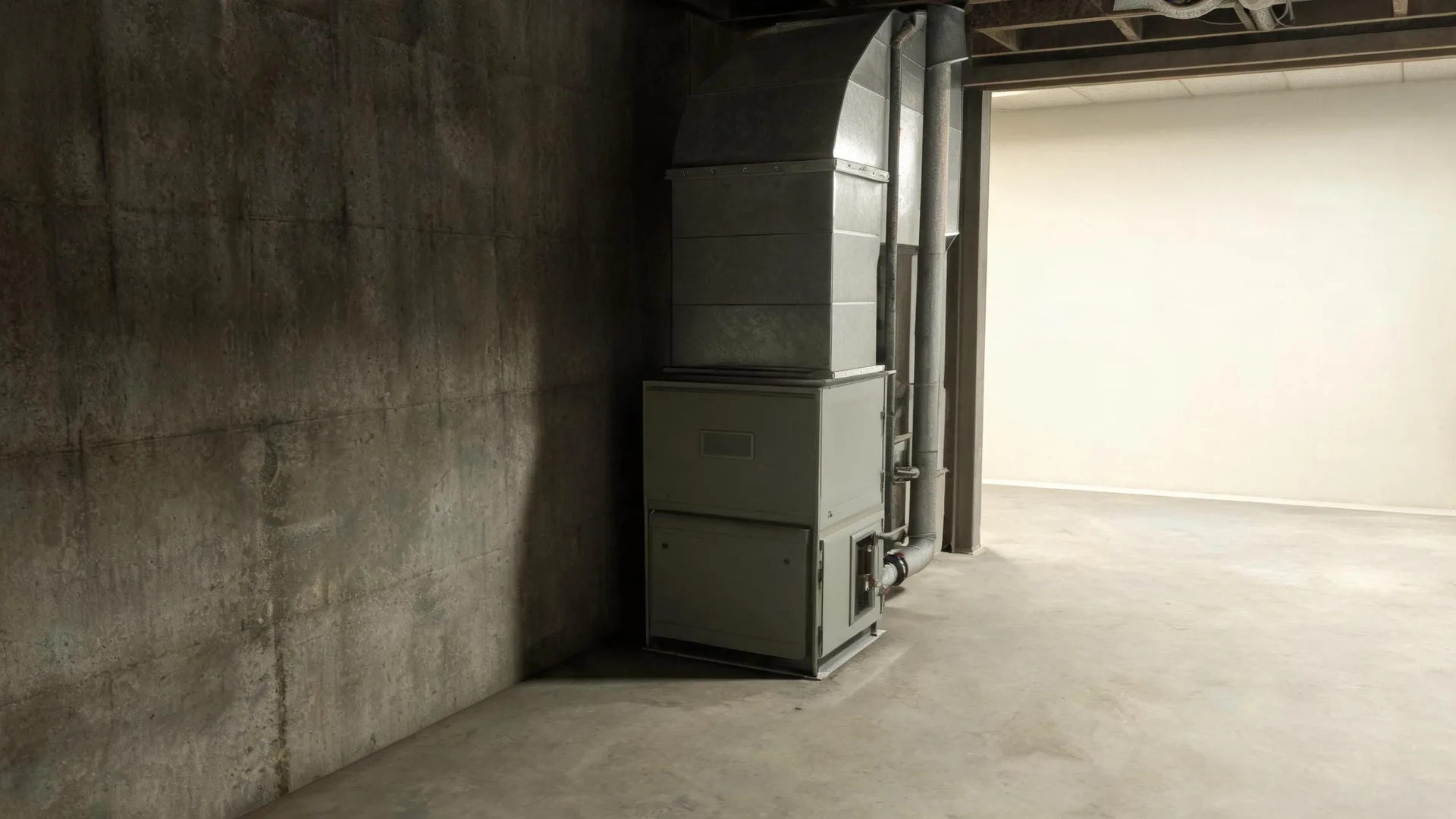
The furnace itself sits in a utility space, basement, or closet and is the unit a homeowner is most likely to have seen before. It houses the heat exchanger and the blower, which together move conditioned air into the supply side of the house. A new installation means this cabinet and everything inside it is replaced.
The flue pipe runs from the furnace to an exterior wall or roofline and carries combustion gases out of the living space. Alongside it, the air handler components, the filter housing, and the gas line connection all tie into the furnace cabinet and are part of what a contractor addresses when the unit goes in.
The drawing shows a typical layout, and a licensed contractor determines exactly what applies to this house.
Get matched in Clayton CountyClayton County, Georgia, by the numbers
51 severe weather events were recorded in Clayton County, Georgia between 2015 and 2024.
NOAA National Centers for Environmental Information, Storm Events Database, bulk CSV export, events 2015-01-01 through 2024-12-31.Half the homes in Clayton County, Georgia were built in 1989 or earlier (2020-2024 ACS 5-year).
U.S. Census Bureau, 2020-2024 American Community Survey 5-Year EstimatesClayton County, Georgia holds 115,476 housing units (2020-2024 ACS 5-year).
U.S. Census Bureau, 2020-2024 American Community Survey 5-Year EstimatesOwners occupy 54.5% of the occupied homes in Clayton County, Georgia (2020-2024 ACS 5-year).
U.S. Census Bureau, 2020-2024 American Community Survey 5-Year EstimatesFurnace & HVAC Installation Rules for Clayton County, Georgia4 codes & standards
What the Installation Actually Looks Like
Non-weatherized gas furnaces manufactured on or after November 19, 2015 must reach 80.0 percent AFUE.
Non-weatherized oil-fired furnaces manufactured on or after November 19, 2015 must reach 83.0 percent AFUE.
Mobile home gas furnaces manufactured on or after November 19, 2015 must reach 80.0 percent AFUE.
Non-weatherized gas furnaces manufactured on or after December 18, 2028 must reach 95.0 percent AFUE, up from the 80.0 percent minimum that applies to units manufactured before that date.
Severe Weather Events in Clayton County
Clayton County's weather puts real demands on heating equipment over its working life. A furnace sized and installed for local conditions holds up better than one spec'd without that picture in mind.
51 severe weather events, 2015–2024. Source: NOAA National Centers for Environmental Information, Storm Events Database.