Tell us about the job
Takes about a minute. No obligation.
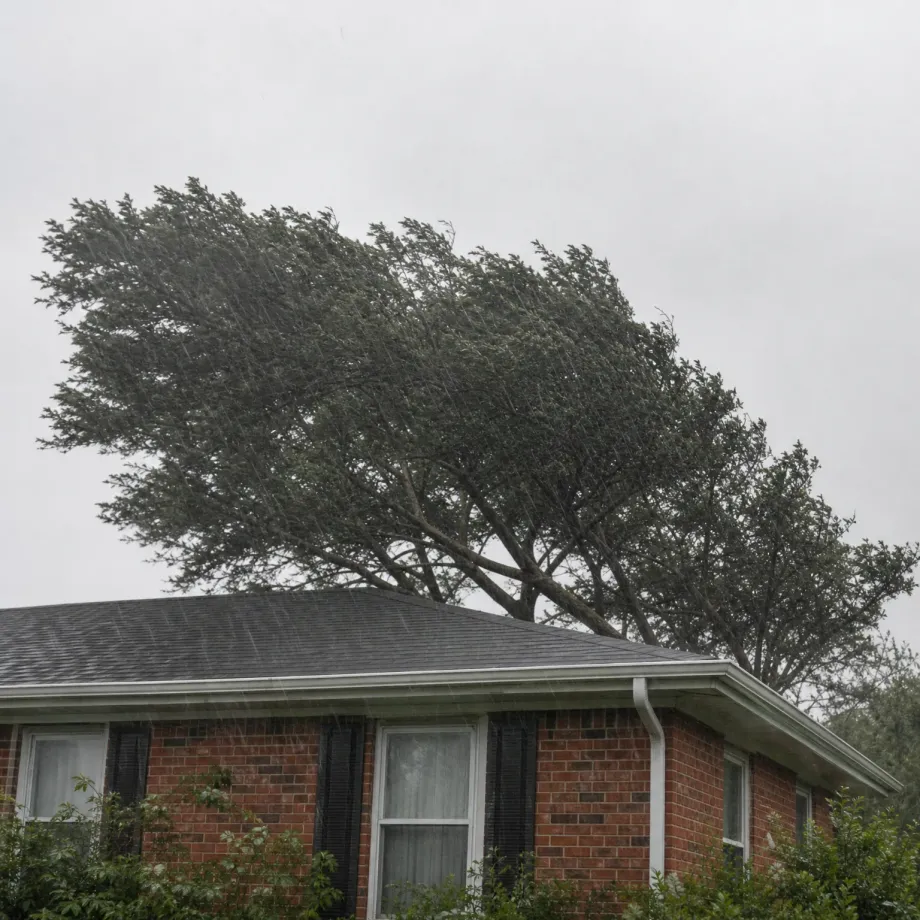
Sizing a furnace for a house in Coffee County is not a catalog decision. 121 severe weather events were recorded in Coffee County, Georgia between 2015 and 2024. Severe weather at that rate drives temperature swings and pressure changes that a loosely planned install handles badly from the start. A contractor working here accounts for that load when choosing equipment capacity and sealing ductwork, because an undersized or poorly fitted system will cycle hard through every rough stretch of weather the county throws at it.
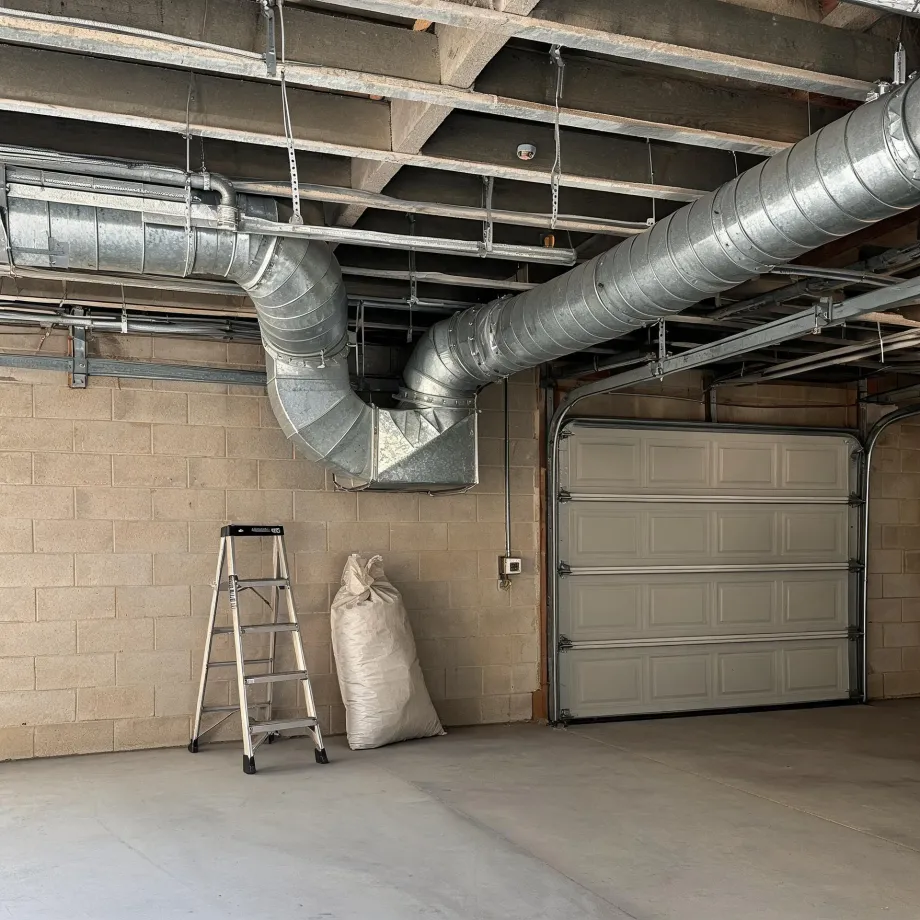
Ductwork laid down for one generation of heating rarely moves air the way a current furnace needs it to. Half the homes in Coffee County, Georgia were built in 1989 or earlier (2020-2024 ACS 5-year). A contractor installing a new furnace in this county has to assess what the existing ducts can actually carry before the equipment question settles, because a system sized for today's output running through passages designed for something older will underperform regardless of what the nameplate says. Electrical is a secondary check. The ductwork is where the job's scope gets decided.
What a Furnace Installation Covers
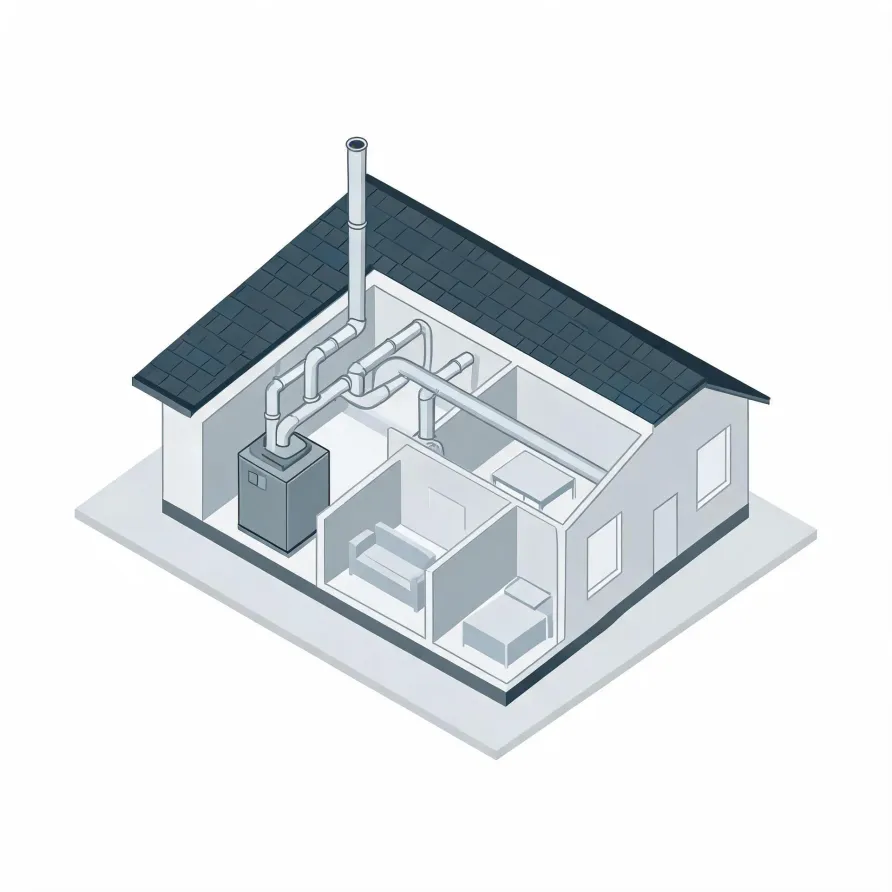
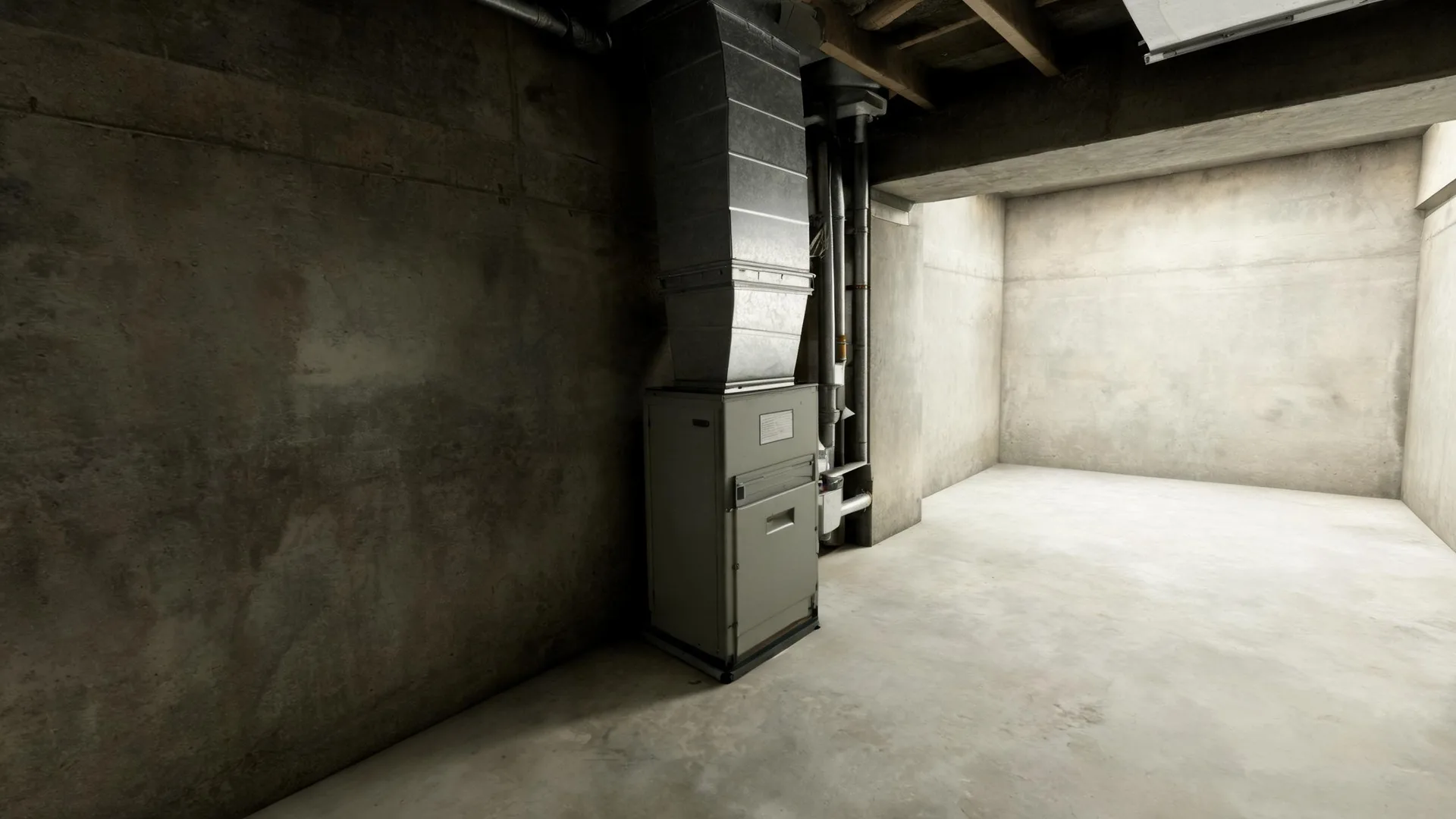
The furnace itself sits inside the house, most often in a basement, utility room, or closet, and it is the unit that produces the heat. Attached to it is the air handler, which moves conditioned air into the duct system. These two pieces are the core of what a contractor brings in and connects.
The thermostat mounts on an interior wall and gives the homeowner control over the system. The flue pipe runs from the furnace to an exterior vent, carrying combustion gases out of the house. A contractor also ties in the condensate line and any associated drain points where the equipment requires them.
The drawing shows a typical layout, and a licensed contractor determines exactly which components apply to this house.
Get matched in Coffee CountyCoffee County, Georgia, by the numbers
121 severe weather events were recorded in Coffee County, Georgia between 2015 and 2024.
NOAA National Centers for Environmental Information, Storm Events Database, bulk CSV export, events 2015-01-01 through 2024-12-31.Half the homes in Coffee County, Georgia were built in 1989 or earlier (2020-2024 ACS 5-year).
U.S. Census Bureau, 2020-2024 American Community Survey 5-Year EstimatesCoffee County, Georgia holds 17,495 housing units (2020-2024 ACS 5-year).
U.S. Census Bureau, 2020-2024 American Community Survey 5-Year EstimatesOwners occupy 64.7% of the occupied homes in Coffee County, Georgia (2020-2024 ACS 5-year).
U.S. Census Bureau, 2020-2024 American Community Survey 5-Year EstimatesFurnace & HVAC Installation Rules for Coffee County, Georgia4 codes, standards & statutes
What the Installation Actually Looks Like
Non-weatherized gas furnaces manufactured on or after November 19, 2015 must reach 80.0 percent AFUE.
Non-weatherized oil-fired furnaces manufactured on or after November 19, 2015 must reach 83.0 percent AFUE.
Mobile home gas furnaces manufactured on or after November 19, 2015 must reach 80.0 percent AFUE.
Non-weatherized gas furnaces manufactured on or after December 18, 2028 must reach 95.0 percent AFUE, up from the 80.0 percent minimum that applies to units manufactured before that date.
Severe Weather Events in Coffee County
Weather in Coffee County puts real demands on heating equipment, from hard cold snaps to summer heat that runs long. A furnace sized and installed for local conditions holds up where a generic job falls short.
121 severe weather events, 2015–2024. Source: NOAA National Centers for Environmental Information, Storm Events Database.