Tell us about the job
Takes about a minute. No obligation.
A furnace installation in Gordon County starts with a load calculation shaped by the house itself: its insulation, its square footage, its duct layout. 70 severe weather events were recorded in Gordon County, Georgia between 2015 and 2024. That pace of events puts real but not overwhelming pressure on heating equipment, and a contractor who blames a failing furnace on the weather alone is skipping the more likely answers. Poor sizing at the original install, duct leakage, and equipment age account for most of what goes wrong here. A properly sized and sealed installation addresses all three from the start.
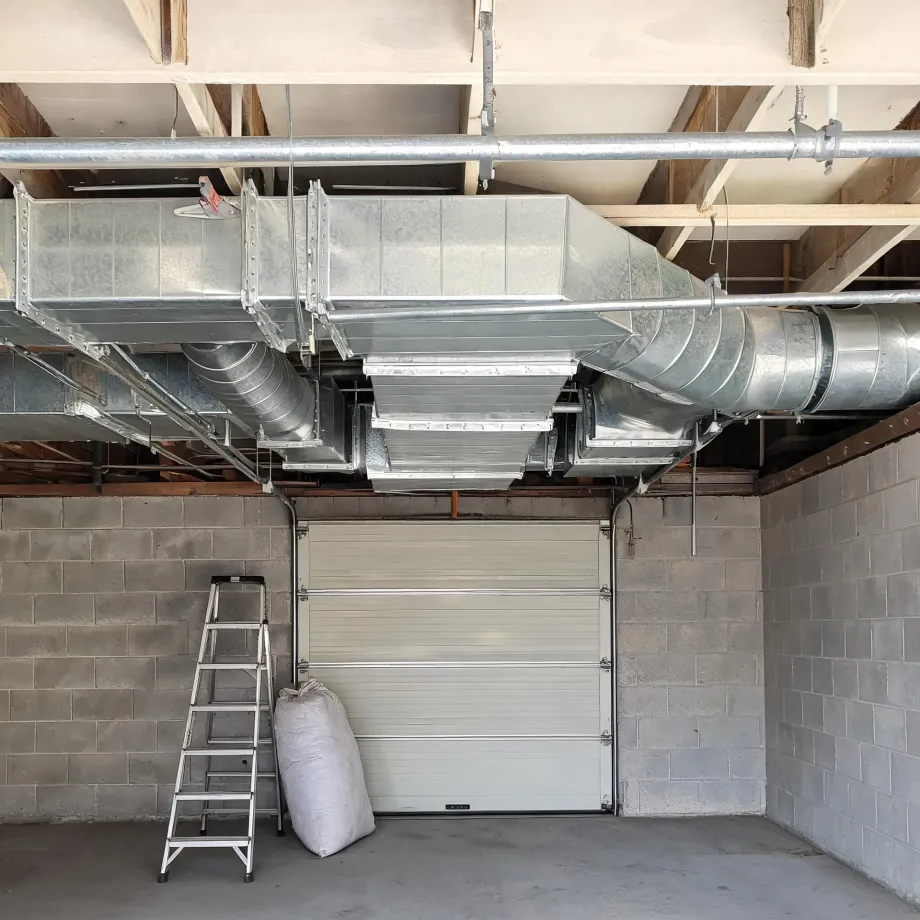
Existing ductwork is what a furnace installation turns on here, and much of it was sized for equipment that has long since been replaced. Half the homes in Gordon County, Georgia were built in 1987 or earlier (2020-2024 ACS 5-year). Ducts designed around an earlier generation of heating systems carry different static pressure requirements than a modern furnace expects, and a contractor who skips that assessment quotes the box before knowing what the box has to feed. When the ductwork cannot move air the way the new unit requires, the installation does not end at the equipment.
What a Furnace Installation Covers
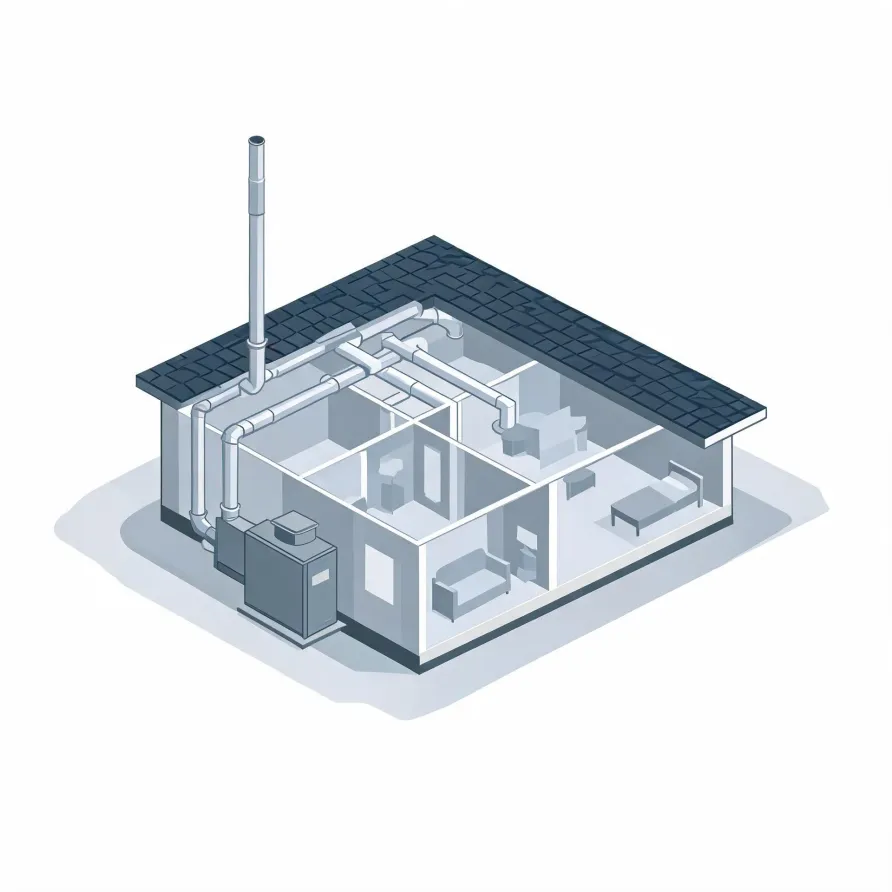
The furnace itself sits in a utility space, basement, or closet and is the unit a contractor physically sets in place and connects during an installation. Alongside it, the flue pipe runs from the furnace to an exterior vent, carrying combustion gases out of the house. These are the two pieces that anchor the job.
The air handler or blower compartment, which may be built into the furnace cabinet or mounted separately, moves conditioned air into the duct system once the furnace is running. A thermostat on an interior wall ties the whole system together, giving the homeowner a point of control. The gas line connection and the condensate drain, where applicable, are also part of what a contractor addresses at the installation site.
The drawing shows a typical layout, and a licensed contractor determines what the work covers in your specific home.
Find a contractor in Gordon CountyGordon County, by the numbers
70 severe weather events were recorded in Gordon County, Georgia between 2015 and 2024.
NOAA National Centers for Environmental Information, Storm Events Database, bulk CSV export, events 2015-01-01 through 2024-12-31.Half the homes in Gordon County, Georgia were built in 1987 or earlier (2020-2024 ACS 5-year).
U.S. Census Bureau, 2020-2024 American Community Survey 5-Year EstimatesGordon County, Georgia holds 23,562 housing units (2020-2024 ACS 5-year).
U.S. Census Bureau, 2020-2024 American Community Survey 5-Year EstimatesOwners occupy 73.9% of the occupied homes in Gordon County, Georgia (2020-2024 ACS 5-year).
U.S. Census Bureau, 2020-2024 American Community Survey 5-Year EstimatesCodes & Standards Governing Furnace Installation in Gordon County, Georgia4 sourced rules and standards
What the installation actually looks like
Non-weatherized gas furnaces manufactured on or after November 19, 2015 must reach 80.0 percent AFUE.
Non-weatherized oil-fired furnaces manufactured on or after November 19, 2015 must reach 83.0 percent AFUE.
Mobile home gas furnaces manufactured on or after November 19, 2015 must reach 80.0 percent AFUE.
Non-weatherized gas furnaces manufactured on or after December 18, 2028 must reach 95.0 percent AFUE, up from the 80.0 percent minimum that applies to units manufactured before that date.
Severe Weather Events in Gordon County
Georgia's climate puts real demands on heating equipment, and Gordon County has its own history of weather that shortens equipment life and raises the stakes on sizing and installation quality. A furnace installed without accounting for local conditions is one that works harder than it should.
70 severe weather events, 2015–2024. Source: NOAA National Centers for Environmental Information, Storm Events Database.