Tell us about the job
Takes about a minute. No obligation.
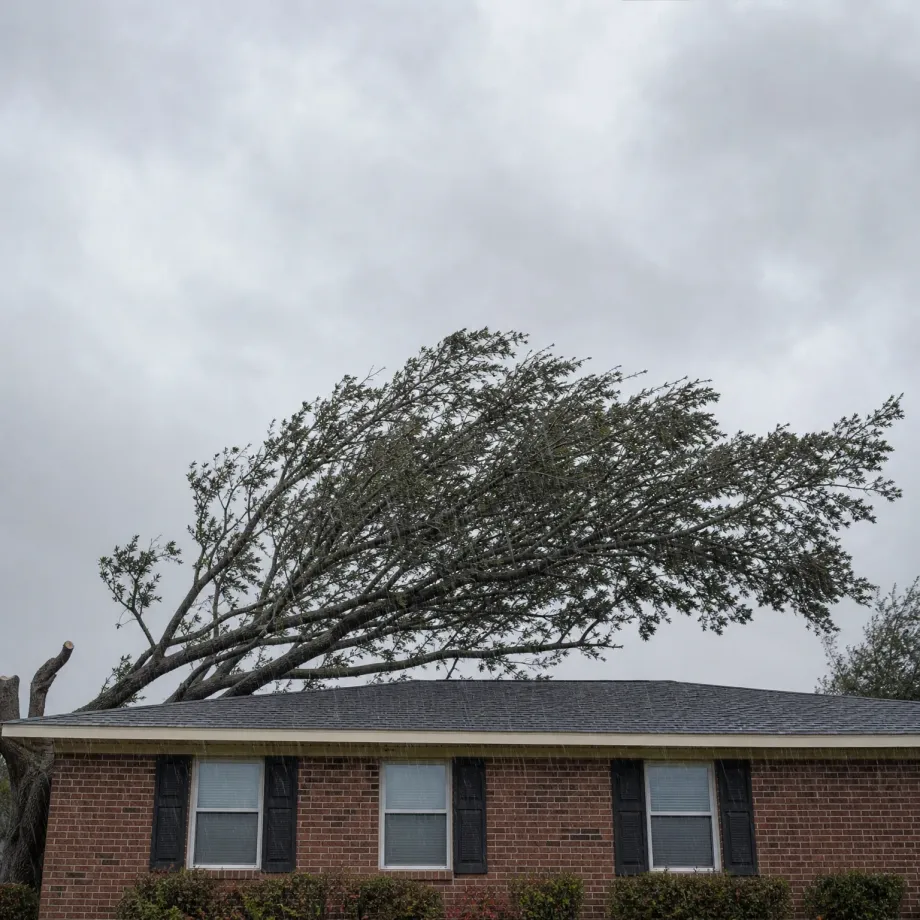
A contractor quoting a furnace install in Glynn County starts from what the local climate actually asks of a heating system. 71 severe weather events were recorded in Glynn County, Georgia between 2015 and 2024. At that rate, severe weather is a standing condition rather than an occasional interruption, and that shapes two decisions before any equipment is ordered: what capacity the unit needs to handle the load reliably, and how well the ductwork, connections, and sealing will hold under repeated stress. A unit that is sized or fitted to catalog minimums will show the gap sooner than the manufacturer's estimate suggests.
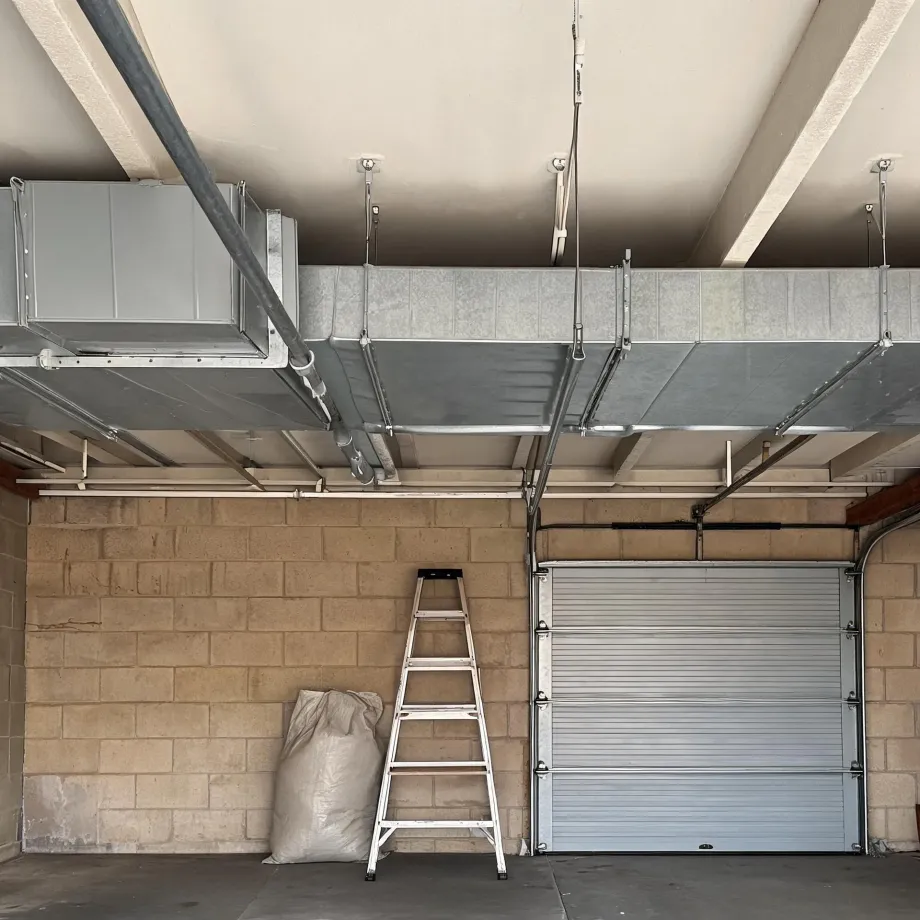
Ductwork sized for an older generation of equipment is what a contractor finds in a large share of houses here. Half the homes in Glynn County, Georgia were built in 1988 or earlier (2020-2024 ACS 5-year). That gap between what the ducts were built for and what a new furnace moves through them is where an installation either works or does not. A contractor installing a furnace has to assess whether the existing trunk lines and branch runs will carry the new system's airflow before any equipment gets ordered, because undersized ductwork starves a furnace of return air and shortens its service life regardless of the unit's quality.
What a Furnace Installation Puts in Your Home
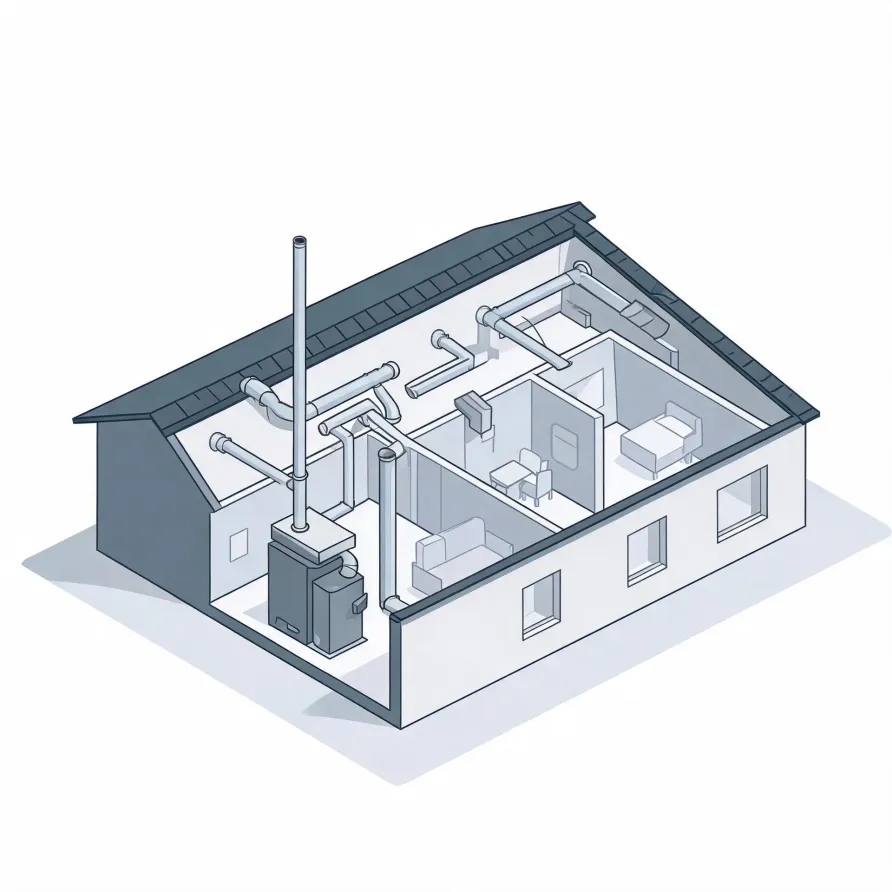
The furnace itself sits inside the house, most often in a basement, utility closet, or crawl space. It holds the heat exchanger and the blower, which together produce and push heated air through the home. A new installation also brings a flue or venting pipe, which runs from the furnace to an outside wall or through the roof to carry combustion gases out.
The thermostat mounts on an interior wall and serves as the control point for the whole system. A new furnace installation pairs with a fresh filter housing and, depending on the existing setup, may include a new air handler cabinet where the blower and coil assembly are housed together as a single unit.
The drawing beside this text shows the general layout of these components, and a licensed contractor will determine exactly what applies to your house.
Get matched in Glynn CountyGlynn County, by the numbers
71 severe weather events were recorded in Glynn County, Georgia between 2015 and 2024.
NOAA National Centers for Environmental Information, Storm Events Database, bulk CSV export, events 2015-01-01 through 2024-12-31.Half the homes in Glynn County, Georgia were built in 1988 or earlier (2020-2024 ACS 5-year).
U.S. Census Bureau, 2020-2024 American Community Survey 5-Year EstimatesGlynn County, Georgia holds 43,500 housing units (2020-2024 ACS 5-year).
U.S. Census Bureau, 2020-2024 American Community Survey 5-Year EstimatesOwners occupy 66.7% of the occupied homes in Glynn County, Georgia (2020-2024 ACS 5-year).
U.S. Census Bureau, 2020-2024 American Community Survey 5-Year EstimatesFurnace Installation Rules for Glynn County, Georgia4 codes and standards
What the installation actually looks like
Non-weatherized gas furnaces manufactured on or after November 19, 2015 must reach 80.0 percent AFUE.
Non-weatherized oil-fired furnaces manufactured on or after November 19, 2015 must reach 83.0 percent AFUE.
Mobile home gas furnaces manufactured on or after November 19, 2015 must reach 80.0 percent AFUE.
Non-weatherized gas furnaces manufactured on or after December 18, 2028 must reach 95.0 percent AFUE, up from the 80.0 percent minimum that applies to units manufactured before that date.
Severe Weather Events in Glynn County
Weather patterns in coastal Georgia put real load on heating and cooling equipment over time. A furnace sized and installed for local conditions holds up better than one spec'd for somewhere else.
71 severe weather events, 2015–2024. Source: NOAA National Centers for Environmental Information, Storm Events Database.